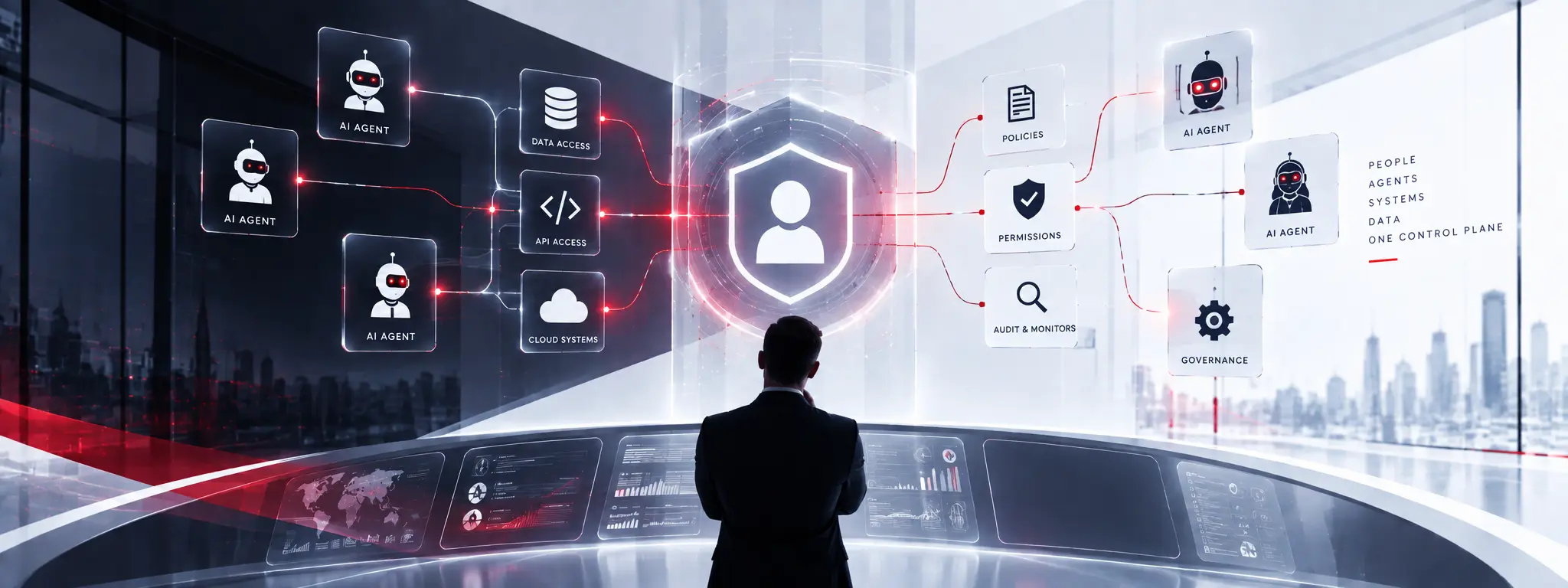

As organisations continue to embrace cloud applications, hybrid working, remote employees, contractors, and third-party partners, securing workforce identities has become a business-critical priority. Traditional network security is no longer enough because identities have become the new security perimeter. Every employee account, privileged administrator, and contractor login represents a potential entry point for cybercriminals.
This is where workforce IAM becomes essential. A modern workforce identity and access management strategy enables organisations to verify identities, control user access, enforce security policies, and reduce the risk of credential-based attacks. Whether your organisation has hundreds or thousands of users, implementing effective workforce security practices through modern IAM solutions helps protect critical business assets while improving employee productivity.
In this guide, we'll explain everything you need to know about workforce IAM, how it differs from traditional approaches, its role in Zero Trust security, and how organisations can choose the right solution for long-term success.
Table of Contents
· What is Workforce IAM?
· What are the Four Pillars of IAM for Workforce?
· IAM and CIAM: What Are the Differences?
· Workforce IAM vs Traditional IAM
· Advantages of Identity and Access Management in the Workforce
· The Power of a Strong Workforce IAM During a Data Breach
· Types of IAM Solutions
· How IAM Software Works Together
· Key Components of a Workforce IAM Solution
· What to Look for in Workforce IAM Solutions
· How Workforce IAM Fits into Zero Trust
· Workforce IAM Challenges
· Legacy IAM vs Modern Identity and Access Management Software
· AI in Identity and Access Management
· Who Needs Workforce IAM?
· Best Practices for Implementation
· Emerging Market Trends
· Conclusion
What is Workforce IAM?
Workforce IAM refers to the technologies, policies, and processes used to manage digital identities and control employee access across an organisation. It ensures that the right individuals receive the right level of access to the right resources at the right time.
Modern workforce identity and access management combines authentication, authorisation, identity verification, lifecycle management, and continuous monitoring to strengthen workforce security. Rather than relying solely on usernames and passwords, organisations now use multi-factor authentication, passwordless login, adaptive authentication, and automated provisioning.
An effective identity and access management IAM strategy improves security while simplifying user experiences. It also enables centralised identity management, making it easier for IT teams to manage employee identities across cloud, on-premises, and hybrid environments.
What are the Four Pillars of IAM for Workforce?
A successful workforce IAM strategy is built on four core pillars:
1. Identity Management
Centralised identity management ensures every employee has a unique digital identity throughout their employment lifecycle.
2. Authentication
Modern authentication methods verify user identities using strong identity verification, including MFA, biometrics, and passwordless technologies.
3. Access Management
Access management determines what resources users can access based on their roles, responsibilities, and security policies.
4. Governance
Governance ensures access rights remain appropriate through regular reviews, compliance reporting, and automated provisioning.
Together, these pillars strengthen workforce security while improving operational efficiency.
IAM and CIAM: What Are the Differences?
Although both manage digital identities, they serve different audiences.
Workforce identity and access management focuses on employees, contractors, and internal users, while Customer Identity and Access Management (CIAM) is designed for customers and external users.
Identity and access management IAM for employees prioritises security, compliance, and privileged access. CIAM prioritises customer experience, scalability, and seamless registration.
Workforce IAM vs Traditional IAM
Traditional IAM systems were designed primarily for on-premises environments with fixed office locations.
Today's workforce IAM platforms support hybrid workforces, SaaS applications, cloud infrastructure, mobile devices, and remote access.
Modern IAM solutions also incorporate AI, risk-based authentication, and continuous identity verification, making them significantly more effective for today's evolving threat landscape and improving overall workforce security.
Advantages of Identity and Access Management in the Workforce
Implementing workforce IAM delivers significant business benefits:
· Improved workforce security
· Faster employee onboarding
· Automated identity management
· Reduced IT workload
· Better compliance with regulations
· Centralised access management
· Enhanced employee productivity
· Lower risk of insider threats
· Simplified application access
Modern workforce identity management enables organisations to automate user provisioning and de-provisioning, ensuring users always have appropriate access.
The Power of a Strong Workforce IAM During a Data Breach
When attackers compromise credentials, workforce IAM provides multiple layers of defence.
Continuous identity verification, adaptive authentication, privileged access controls, behavioural analytics, and automated responses help detect suspicious activity before significant damage occurs.
Effective IAM solutions can automatically revoke access, require additional authentication, and alert security teams, significantly reducing breach impact while strengthening workforce security.
Types of IAM Solutions
Organisations typically deploy several IAM solutions, including:
· Single Sign-On (SSO)
· Multi-Factor Authentication (MFA)
· Passwordless Authentication
· Privileged Access Management (PAM)
· Identity Governance and Administration (IGA)
· Identity Threat Detection and Response (ITDR)
Each solution contributes to stronger access management, better identity management, and improved operational security.
How Do Different Identity and Access Management Software Tools Work Together?
Modern identity and access management IAM platforms integrate multiple security technologies into one ecosystem.
Identity providers authenticate users, SSO simplifies access, MFA strengthens authentication, PAM secures privileged accounts, while governance tools manage access reviews.
Together, these integrated IAM solutions improve workforce identity management while reducing administrative complexity.
Key Components of an IAM Solution for Your Workforce
An effective workforce IAM platform should include:
· Automated identity management
· Strong identity verification
· Role-Based Access Control (RBAC)
· Adaptive access management
· Single Sign-On
· Multi-Factor Authentication
· Lifecycle management
· Audit reporting
· Privileged access controls
These capabilities work together to strengthen workforce security across the enterprise.
What to Look for in Workforce IAM Solutions
When evaluating IAM solutions, organisations should consider:
· Cloud-native architecture
· Scalability
· AI-driven risk detection
· Automated provisioning
· Strong identity verification
· Compliance support
· Easy integration
· User-friendly administration
· Zero Trust compatibility
Businesses looking to modernise workforce identity and access management can benefit from comprehensive Workforce Identity & Access Management solutions that combine secure authentication, lifecycle management, adaptive access controls, and centralised administration into a single platform.
How Workforce IAM Fits into Zero Trust
Zero Trust follows the principle of "never trust, always verify."
Workforce IAM is a fundamental component of Zero Trust because every access request requires continuous identity verification before access is granted.
By enforcing least-privilege access management, adaptive authentication, and continuous monitoring, organisations significantly improve workforce security.
Workforce IAM Challenges
Despite its benefits, organisations often face challenges such as:
· Legacy system integration
· Identity sprawl
· User resistance
· Privileged account management
· Compliance requirements
· Complex cloud environments
· Shadow IT
Choosing modern IAM solutions helps address these challenges while simplifying workforce identity management.
Legacy IAM vs Modern Identity and Access Management Software
Legacy platforms often rely on manual administration and static permissions.
Modern identity and access management IAM solutions automate provisioning, support cloud-native architectures, integrate AI, and continuously monitor user behaviour.
This evolution significantly improves identity management, access management, and overall workforce security.
AI in Identity and Access Management
Artificial Intelligence is transforming workforce IAM.
AI analyses user behaviour, detects anomalies, predicts threats, automates routine tasks, and improves identity verification processes.
AI-powered IAM solutions enable faster threat detection while reducing false positives and enhancing workforce security.
Who Needs Workforce Identity and Access Management Solutions?
Every organisation with employees using digital systems benefits from workforce identity and access management, including:
· Enterprises
· Financial institutions
· Healthcare organisations
· Government agencies
· Educational institutions
· Manufacturing companies
· Retail businesses
· Technology providers
Any organisation managing employee identities should implement robust workforce identity management to reduce cyber risk.
Best Practices for Identity and Access Management Implementation
Successful identity and access management IAM implementation includes:
· Enforce least privilege
· Enable MFA
· Automate identity management
· Conduct regular access reviews
· Monitor privileged accounts
· Use risk-based authentication
· Continuously improve identity verification
· Train employees on security awareness
These best practices help strengthen long-term workforce security.
Emerging Trends in the Workforce Identity and Access Management Market
The future of workforce IAM includes:
· Passwordless authentication
· AI-powered threat detection
· Identity-first security
· Continuous authentication
· Decentralised identities
· Behavioural analytics
· Cloud-native IAM solutions
· Increased automation
These innovations will continue enhancing workforce security while delivering better user experiences.
Conclusion
As organisations become increasingly digital, workforce IAM has evolved from an IT function into a strategic cybersecurity requirement. Modern workforce identity and access management protects employees, secures business applications, strengthens workforce security, and supports Zero Trust initiatives through intelligent identity verification, automated identity management, and robust access management.
Investing in modern IAM solutions enables organisations to reduce cyber risk, improve compliance, simplify user access, and build a secure foundation for future growth. By implementing a comprehensive identity and access management IAM strategy, businesses can confidently support hybrid work, cloud adoption, and digital transformation while ensuring every workforce identity is protected.
For organisations looking to modernise identity security, Trevonix Workforce Identity & Access Management offers a comprehensive approach to securing employees, contractors, and privileged users across hybrid and multi-cloud environments. Built to support modern enterprises, the solution helps automate identity lifecycle management, strengthen authentication, simplify governance, and enable Zero Trust security principles.
Headquartered in London and serving organisations globally, Trevonix delivers advanced cybersecurity and identity solutions that help businesses reduce identity-related risks, improve compliance, and confidently embrace digital transformation. As identity becomes the cornerstone of enterprise security, partnering with an experienced identity security provider can help organizations build a future-ready foundation that supports innovation, resilience, and long-term growth.