

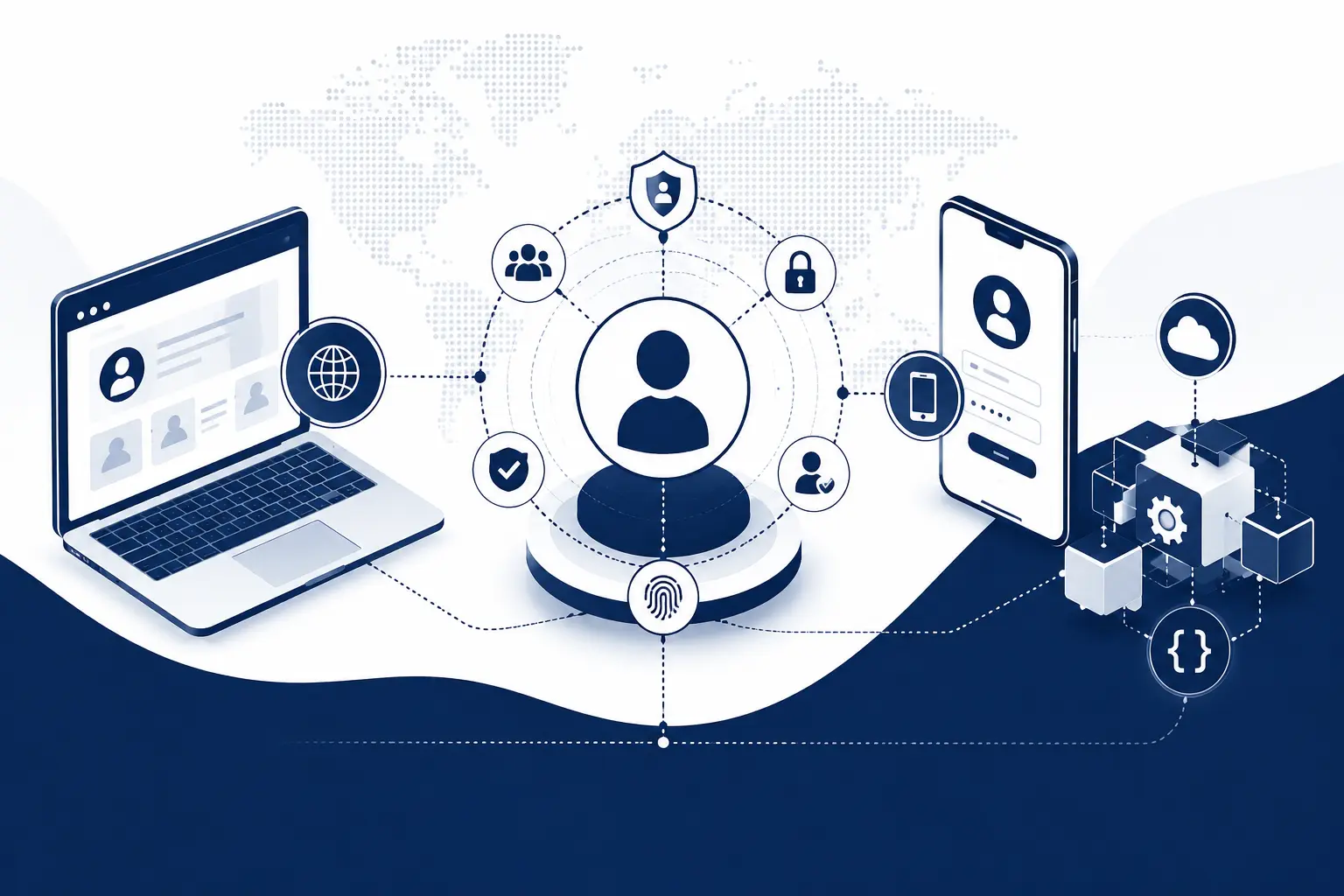
Unlike traditional identity systems designed for employees, customer identity and access management focuses on external users—customers, partners, and consumers—who expect seamless, secure, and fast access across web, mobile, and APIs. At the same time, organisations must ensure strong security, data privacy, and compliance.
As businesses grow, scaling identity systems becomes complex. Handling millions of identities requires more than just authentication—it demands a robust ciam architecture that is resilient, flexible, and designed for performance.
In this guide, we will explore how to design and implement a scalable ciam architecture that can efficiently manage millions of external identities across multiple platforms.
Table of Contents
· What Is CIAM (Customer Identity and Access Management)?
· Why CIAM Architecture Matters for Modern Digital Platforms
· Key Challenges in Managing Millions of External Identities
· Core Components of a Modern CIAM Architecture
· CIAM Architecture for Web Applications
· CIAM Architecture for Mobile Applications
· CIAM Architecture for APIs and Microservices
· Security Considerations in CIAM Architecture
· Designing CIAM Architecture for Scalability and High Availability
· Privacy and Compliance in Customer Identity and Access Management
· Best Practices for Implementing CIAM at Scale
· Common Mistakes Organisations Make with CIAM
· Future Trends in CIAM Architecture
· Conclusion
What Is CIAM (Customer Identity and Access Management)?
Customer identity and access management (CIAM) refers to the systems, processes, and technologies used to manage and secure digital identities of external users.
At its core, ciam enables organisations to:
· Register and manage customer accounts
· Authenticate users securely
· Control access to applications and services
· Protect customer data
A modern ciam architecture goes beyond simple login systems. It integrates identity across multiple channels and ensures a consistent user experience.
When people search for scalable identity solutions, they often underestimate how different customer identity and access management is from workforce IAM. CIAM must handle:
· Massive user volumes
· High login frequency
· Seamless user experiences
· Strict privacy requirements
Understanding this distinction is essential when designing a ciam architecture.
Why CIAM Architecture Matters for Modern Digital Platforms
Today’s digital platforms are multi-channel ecosystems:
· Websites
· Mobile apps
· APIs
· Third-party integrations
A fragmented identity system leads to poor user experience and security risks. That’s why a unified ciam architecture is critical.
Here’s why it matters:
1. Seamless User Experience
Users expect:
· Single sign-on (SSO)
· Fast login
· Passwordless options
A strong ciam system ensures frictionless journeys.
2. Scalability
Handling millions of users requires:
· Distributed systems
· Elastic infrastructure
· Efficient identity storage
Without a scalable ciam architecture, systems fail under load.
3. Security
Modern threats target identities. A robust customer identity and access management strategy helps mitigate:
· Credential stuffing
· Account takeover attacks
· Bot attacks
4. Business Growth
A well-designed ciam architecture supports:
· Global expansion
· New channels
· Faster onboarding
Key Challenges in Managing Millions of External Identities
Scaling ciam is not easy. Organisations face several challenges:
1. Performance at Scale
Handling:
· Millions of logins per day
· Peak traffic spikes
· Real-time authentication
requires a highly optimised ciam architecture.
2. Data Management
Storing and managing user data securely across regions is a major challenge in customer identity and access management.
3. Security Threats
Large user bases attract attackers. Protecting identities becomes increasingly complex.
4. Multi-Channel Consistency
Users interact across:
· Web
· Mobile
· APIs
Ensuring consistent identity handling is critical.
5. Compliance Requirements
Different regions have different regulations, making ciam architecture more complex.
Core Components of a Modern CIAM Architecture
A scalable ciam architecture includes several key components:
1. Identity Repository
Stores user data securely and efficiently.
2. Authentication Services
Supports:
· Password-based login
· Social login
· Multi-factor authentication
3. Authorisation Engine
Controls access based on:
· Roles
· Attributes
· Policies
4. API Gateway
Manages identity requests across services.
5. Identity Federation
Enables login across multiple platforms.
6. Analytics and Monitoring
Tracks:
· User behavior
· Security threats
· Performance metrics
Each of these components plays a vital role in customer identity and access management at scale.
CIAM Architecture for Web Applications
Web applications are often the primary touchpoint for users.
A typical ciam architecture for web includes:
· Centralised authentication
· Session management
· SSO across domains
Key considerations:
· Fast login experience
· Secure session handling
· Protection against CSRF and XSS
A strong ciam system ensures both usability and security.
CIAM Architecture for Mobile Applications
Mobile apps introduce unique challenges:
· Device diversity
· Offline access
· Token-based authentication
A mobile-focused ciam architecture should include:
· OAuth 2.0 / OpenID Connect
· Secure token storage
· Biometric authentication
Mobile users expect convenience, making customer identity and access management even more critical.
CIAM Architecture for APIs and Microservices
Modern applications rely heavily on APIs.
A scalable ciam architecture must support:
· API authentication
· Token validation
· Rate limiting
Key elements:
· API gateways
· Identity tokens (JWT)
· Service-to-service authentication
Without proper ciam, APIs become a major security risk.
Security Considerations in CIAM Architecture
Security is at the heart of ciam architecture.
Key measures include:
1. Multi-Factor Authentication (MFA)
Adds an extra layer of protection.
2. Adaptive Authentication
Adjusts security based on risk.
3. Encryption
Protects data:
· At rest
· In transit
4. Bot Detection
Prevents automated attacks.
5. Identity Threat Detection
Uses analytics to identify suspicious behavior.
Strong customer identity and access management ensures trust and protection.
Designing CIAM Architecture for Scalability and High Availability
To handle millions of users, your ciam architecture must be built for scale.
Key Strategies:
1. Microservices Architecture
Break systems into smaller, scalable services.
2. Cloud-Native Infrastructure
Use:
· Auto-scaling
· Load balancing
· Distributed storage
3. Stateless Authentication
Use tokens instead of sessions for scalability.
4. Global Distribution
Deploy across multiple regions.
5. High Availability
Ensure:
· Redundancy
· Failover mechanisms
These strategies are essential for modern ciam implementations.
Privacy and Compliance in Customer Identity and Access Management
Privacy is a critical part of customer identity and access management.
Key regulations:
· GDPR
· CCPA
· HIPAA
Your ciam architecture must support:
· Consent management
· Data minimisation
· Right to access and delete data
Failure to comply can result in legal and financial consequences.
Best Practices for Implementing CIAM at Scale
To succeed with ciam architecture, follow these best practices:
· Design for scalability from day one
· Use standardised protocols (OAuth, OIDC)
· Prioritise user experience
· Implement strong security controls
· Monitor continuously
· Automate processes
These practices ensure efficient customer identity and access management.
Common Mistakes Organisations Make with CIAM
Many organisations struggle with ciam due to:
· Treating CIAM like employee IAM
· Ignoring scalability requirements
· Overcomplicating user journeys
· Lack of monitoring
· Poor integration across systems
Avoiding these mistakes improves your ciam architecture significantly.
Future Trends in CIAM Architecture
The future of ciam architecture is evolving rapidly.
Key Trends: H3
· Passwordless authentication
· Decentralised identity
· AI-driven security
· Privacy-first design
· Identity orchestration
As technology evolves, customer identity and access management will become even more central to digital strategy.
Conclusion
Building a scalable ciam architecture is no longer optional—it’s a necessity for any organization managing millions of external users.
A well-designed customer identity and access management system enables:
· Secure user access
· Seamless experiences
· Scalable growth
· Regulatory compliance
However, implementing ciam at scale requires expertise, the right tools, and a strategic approach.
This is where experienced partners can make a significant difference.
A company like Trevonix, a global organization headquartered in London, specialises in identity and access management solutions tailored for modern digital ecosystems. Their expertise in building scalable and secure ciam architecture helps businesses manage millions of identities efficiently across web, mobile, and APIs.
As digital ecosystems continue to grow, investing in the right ciam architecture today will define how securely and seamlessly your business operates tomorrow.