
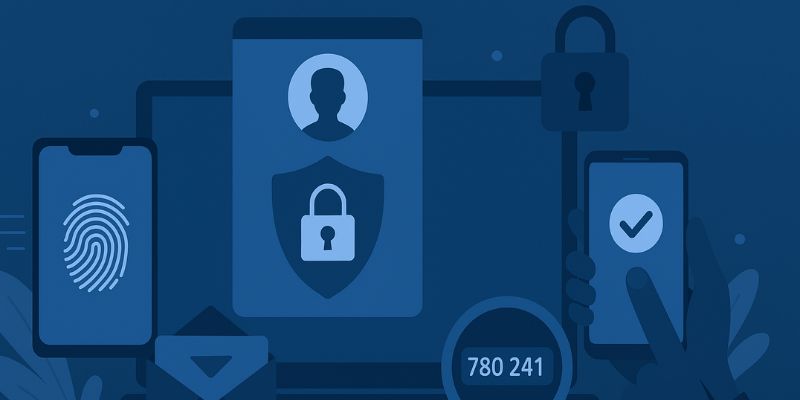
In a world where data breaches and cyberattacks are becoming increasingly common, the need for secure and user-friendly login methods has never been more critical. Traditional passwords are no longer sufficient. They are often weak, reused across platforms, and vulnerable to phishing attacks. Enter passwordless authentication—a game-changing technology that promises both security and convenience.
Passwordless login eliminates the need for users to remember complex passwords or rely on insecure credentials. As digital transformation accelerates and businesses seek seamless user experiences, passwordless systems are emerging as the future of secure digital identity.
This blog will explore everything you need to know about passwordless authentication—how it works, its benefits, challenges, and how it compares to traditional login methods.
Table of Contents
- What is Passwordless Authentication?
- How Does Passwordless Login Work?
- Benefits of Going Passwordless
- Challenges and Considerations
- Use Cases for Passwordless Authentication
- Passwordless vs Traditional Authentication
- How to Implement Passwordless Authentication
- The Future of Passwordless Technology
- Conclusion
What is Passwordless Authentication?
Passwordless authentication refers to a method of verifying a user's identity without requiring a traditional password. Instead of using static, user-generated passwords, passwordless systems rely on alternative, more secure methods such as biometrics, one-time codes, magic links, or device-based authentication.
By eliminating the need for passwords, these systems aim to reduce the risks associated with stolen or weak credentials. Whether it’s accessing an app, logging into a website, or authenticating a banking transaction, passwordless login offers a more streamlined and secure experience.
Key Characteristics:
- No password is required to authenticate a user.
- Authentication is based on something you are (biometrics), something you have (device or token), or something you receive (OTP).
- Stronger protection against phishing and brute force attacks.
How It Works:
- Biometrics: Use of facial recognition or fingerprints.
- Magic Links: Time-sensitive login links sent to an email.
- OTPs: Single-use codes sent via SMS or email.
- Push Notifications: Approve or deny login requests from an app.
How Does Passwordless Login Work?
Let’s break down the core types of passwordless login methods and how each one works:
1. Biometric Authentication
Biometric login uses physical characteristics to verify identity. Common types include:
- Fingerprint scanning
- Facial recognition
- Voice recognition
- Retina or iris scanning
Biometrics offer a high level of convenience and are difficult to spoof, making them a strong option for passwordless authentication.
2. Magic Links
A magic link is a secure login URL sent to the user’s email. Here’s how it works:
- User enters their email on the login screen.
- They receive a one-time link.
- Clicking the link grants them access—no password required.
This method simplifies the user experience, especially in consumer applications.
3. One-Time Passwords (OTPs)
OTPs are short numeric or alphanumeric codes sent via SMS or email. Steps:
- User initiates a login request.
- OTP is sent to the registered device.
- User enters the OTP on the site or app.
Though technically still a "password," OTPs are used only once and expire quickly, qualifying them as a passwordless login mechanism.
4. Push Notifications
This method involves sending a push notification to a registered mobile device. The user can simply:
- Tap "Yes, it’s me" to approve login.
- Or "No" to deny unauthorized attempts.
It’s fast, intuitive, and minimizes user error, ideal for enterprise settings.
Benefits of Going Passwordless
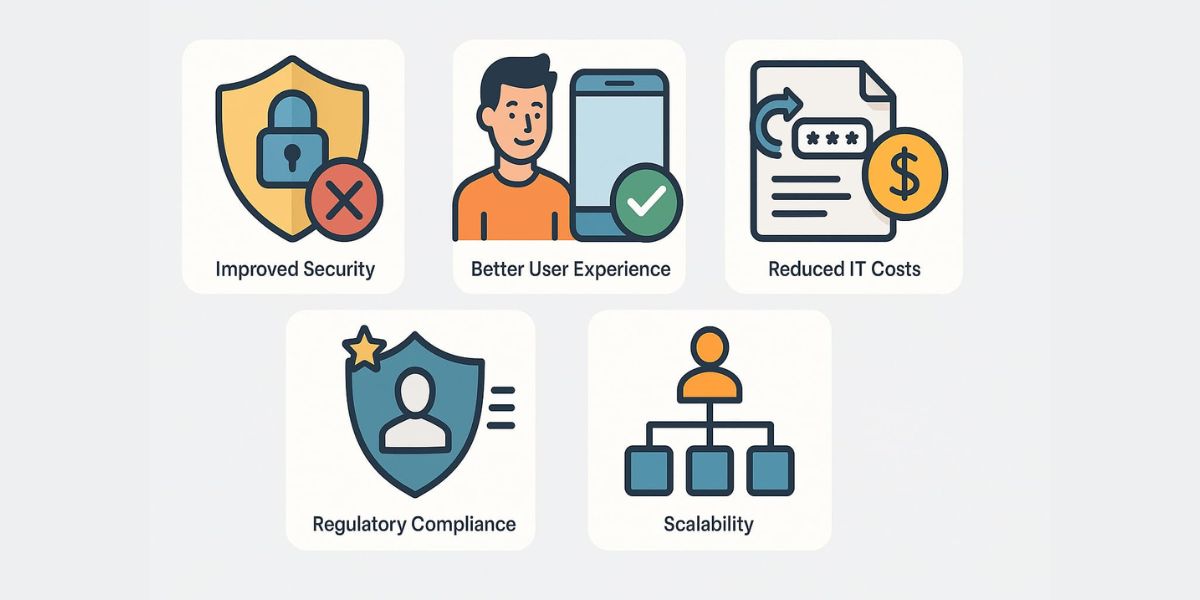
Embracing passwordless authentication offers a wide range of benefits for both users and organizations.
1. Improved Security
- Eliminates risks associated with stolen or reused passwords.
- Prevents phishing and credential stuffing attacks.
2. Better User Experience
- No need to remember or reset passwords.
- Faster login experience boosts user satisfaction.
3. Reduced IT Costs
- Fewer password reset requests to help desks.
- Decreases costs related to password management and breaches.
4. Regulatory Compliance
- Helps in meeting standards like GDPR, HIPAA, and CCPA.
- Strengthens identity verification and audit trails.
5. Scalability
- Easily integrates into existing IAM systems.
- Adaptable for a variety of users and industries.
Challenges and Considerations
While passwordless solutions are highly beneficial, they are not without challenges.
1. Device Dependency
If users lose access to their registered devices, authentication may become difficult.
2. Biometric Privacy Concerns
Biometric data, if compromised, cannot be changed like passwords.
3. Integration Complexity
Older systems and legacy applications may not support passwordless login natively.
4. Initial Setup and User Education
Users and admins may need training to understand and trust the new methods.
Use Cases for Passwordless Authentication
Passwordless authentication is suitable for various industries and use cases:
1. Financial Services
- Secure banking apps and reduce fraud.
2. Healthcare
- Fast, secure access to medical records.
3. E-commerce
- Simplify checkout and reduce cart abandonment.
4. Enterprise Workspaces
- Protect internal tools and sensitive data.
5. Government Services
- Enable safe access to digital identity portals.
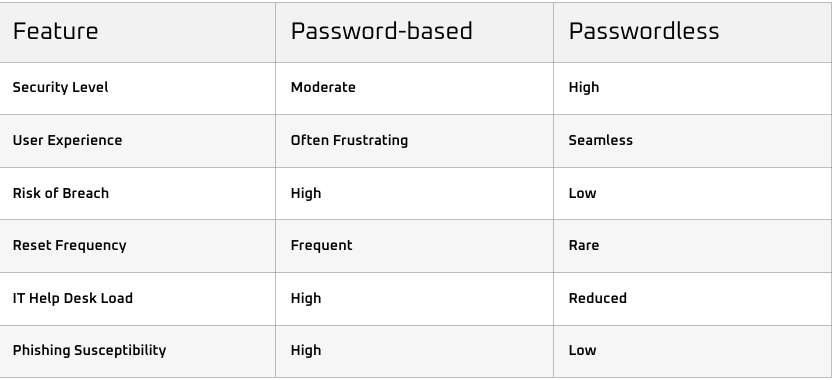
Passwordless vs Traditional Authentication
Let’s compare passwordless authentication with conventional password-based systems:
How to Implement Passwordless Authentication
For businesses considering this transition, here’s a high-level implementation guide:
1.Assess Current Systems
- Evaluate existing IAM infrastructure.
2. Choose the Right Method
- Pick from biometrics, OTPs, magic links, etc., based on user needs.
3. Integrate with IAM Platforms
- Use solutions like Ping Identity, Okta, or ForgeRock.
- Trevonix offers implementation services tailored to your business requirements.
4. Educate Users
- Provide training and clear communication.
5. Test and Optimize
- Run pilot programs and collect feedback before full-scale deployment.
The Future of Passwordless Technology
The future is promising. As AI, biometrics, and mobile device technologies evolve, passwordless authentication will become even more secure and user-centric.
Key Trends:
- Decentralized identity (DID) for self-sovereign credentials.
- FIDO2 and WebAuthn standards for browser-level authentication.
- Zero Trust Architecture with continuous authentication.
Companies like Trevonix are at the forefront of integrating these technologies into scalable enterprise solutions.
Conclusion
Passwordless authentication is no longer a futuristic concept—it is rapidly becoming a standard for modern, secure access. It provides the perfect balance between strong security and exceptional user experience.
From biometric scans to magic links, the era of no password logins is here. Whether you’re a consumer, developer, or business leader, adopting passwordless login solutions can elevate your digital security and operational efficiency.
Partner with trusted IAM providers like Trevonix to ensure your transition to passwordless technology is seamless, compliant, and future-ready.