
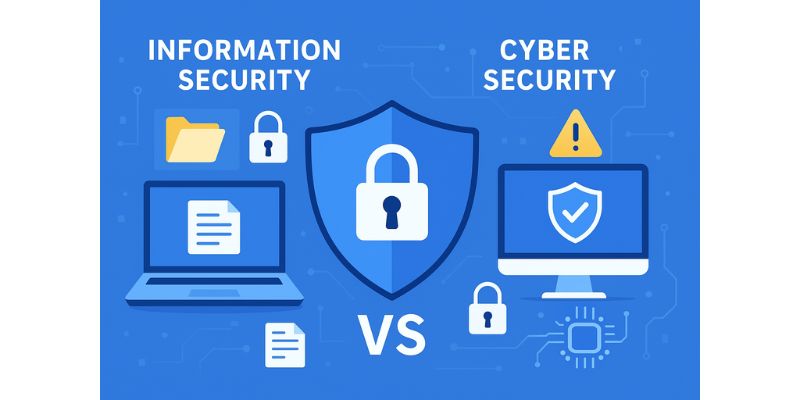
In today’s digital-first world, protecting sensitive data is no longer optional - it is essential. Businesses, governments, and individuals rely on digital systems every day, but along with this reliance comes significant risks. Terms like cyber security and information security are often used interchangeably. However, while they overlap, they are not the same. Understanding the difference between cyber security and information security is critical for building effective defense strategies, ensuring compliance, and reducing risks.
This blog explores information security vs cyber security in detail. We’ll look at their definitions, focus areas, examples, and key differences. We’ll also discuss how the two disciplines work together to protect organizations and why knowing the distinction matters. Finally, we’ll conclude with how companies like Trevonix, a global leader in identity and security solutions, help organizations navigate these complexities.
Table of Contents
- What Is Information Security?
- What Is Cyber Security?
- Information Security vs Cyber Security: Key Differences
- How They Work Together
- Why Understanding the Difference Matters
- Conclusion
What Is Information Security?
Definition
Information security (InfoSec) refers to the practice of protecting information—whether digital, physical, or intellectual—from unauthorized access, disclosure, modification, or destruction. Unlike cyber security, which mainly focuses on digital threats, information security has a broader scope. It covers all forms of information, including printed documents, employee records, trade secrets, and data stored in digital systems.
Focus
The primary focus of information security is to ensure the CIA triad:
- Confidentiality: Ensuring only authorized people can access sensitive information.
- Integrity: Making sure information remains accurate and unaltered.
- Availability: Ensuring information is accessible when needed by authorized users.
Information security strategies go beyond technology. They include policies, processes, governance, and compliance to secure information in every form.
Example
- Restricting access to HR employee files through locked cabinets.
- Implementing role-based access to sensitive databases.
- Encrypting customer information stored in servers.
- Setting organizational policies for handling confidential documents.
What Is Cyber Security?
Definition
Cyber security is the practice of protecting systems, networks, devices, and data from cyberattacks, unauthorized access, or damage. It is a subset of information security but focuses exclusively on the digital space. Cyber security addresses the increasing risks posed by hackers, malware, phishing attacks, ransomware, and other online threats.
Focus
The primary focus of cyber security is defending digital infrastructure against threats that exploit technology. This includes:
- Securing networks and servers.
- Protecting applications and software.
- Defending endpoints like laptops, mobile phones, and IoT devices.
- Preventing unauthorized access through firewalls, intrusion detection, and monitoring systems.
Example
- Installing antivirus and anti-malware software on all company devices.
- Using firewalls to block malicious traffic.
- Applying regular patches to fix system vulnerabilities.
- Training employees to detect phishing emails.
Information Security vs Cyber Security: Key Differences
While both terms relate to data protection, information security vs cyber security differs in scope, approach, and implementation. Let’s break down the difference between cyber security and information security clearly.
Key Differences Explained
1. Scope:
- Information security covers all types of data, whether digital, physical, or intellectual.
- Cyber security is limited to digital systems, networks, and online threats.
2. Approach:
- Information security is policy-driven, focusing on governance, risk management, and compliance.
- Cyber security is technology-driven, emphasizing tools and defense mechanisms against cyberattacks.
3. Threats Addressed:
- Information security addresses insider threats, human errors, theft of physical documents, as well as digital risks.
- Cyber security primarily addresses hackers, malware, phishing, ransomware, and DDoS attacks.
4. Goal:
- Information security aims to protect the confidentiality, integrity, and availability of all information.
- Cyber security aims to protect IT systems, data, and networks from cyber threats.
Comparison Table

How They Work Together
Although we distinguish information security vs cyber security, the two work hand in hand. Cyber security strengthens information security by providing technical defenses against digital threats. On the other hand, information security provides the policies and frameworks that guide cyber security implementation.
For example:
- Information security policy may dictate that sensitive data must be encrypted. Cyber security ensures the actual encryption tools are implemented.
- Information security sets access rules. Cyber security enforces them through multi-factor authentication and identity management tools.
- Information security audits compliance. Cyber security teams monitor and respond to technical incidents.
Together, they form a comprehensive security strategy that safeguards organizations from both digital and non-digital risks.
Why Understanding the Difference Matters
1. Improved Risk Management
Knowing the difference between cyber security and information security helps organizations identify risks more accurately. This ensures resources are allocated where they matter most.
2. Compliance and Governance
Many industries, such as healthcare (HIPAA), finance (PCI DSS), and government (GDPR), require strict compliance. Distinguishing information security vs cyber security ensures organizations meet both technical and governance requirements.
3. Better Resource Allocation
By understanding scope, organizations can invest appropriately. For instance, policies and employee training may fall under information security, while purchasing intrusion detection software is a cyber security measure.
4. Stronger Defense Against Evolving Threats
Modern threats often target digital systems but can also involve social engineering or insider misuse. Combining both approaches ensures organizations remain resilient.
5. Enhanced Business Continuity
Information security ensures availability and integrity, while cyber security prevents disruptions from attacks. Together, they maintain trust and operational efficiency.
Conclusion
Understanding the difference between cyber security and information security is crucial for every organization. While information security vs cyber security often overlap, they serve different but complementary purposes.
- Information security protects all types of data—digital, physical, and intellectual—through policies, compliance, and governance.
- Cyber security focuses on defending digital infrastructure against hackers, malware, and online threats.
In today’s environment, businesses need both. By combining strong policies with robust technology, organizations can build a holistic security posture.
At Trevonix, a global company headquartered in London, we specialize in helping businesses achieve this balance. With expertise in identity governance, access management, and advanced security solutions, Trevonix empowers organizations across the US, UK, Europe, and beyond to protect their most valuable assets.
If your business is serious about reducing risks and strengthening defenses, partner with Trevonix for a future-ready security strategy.