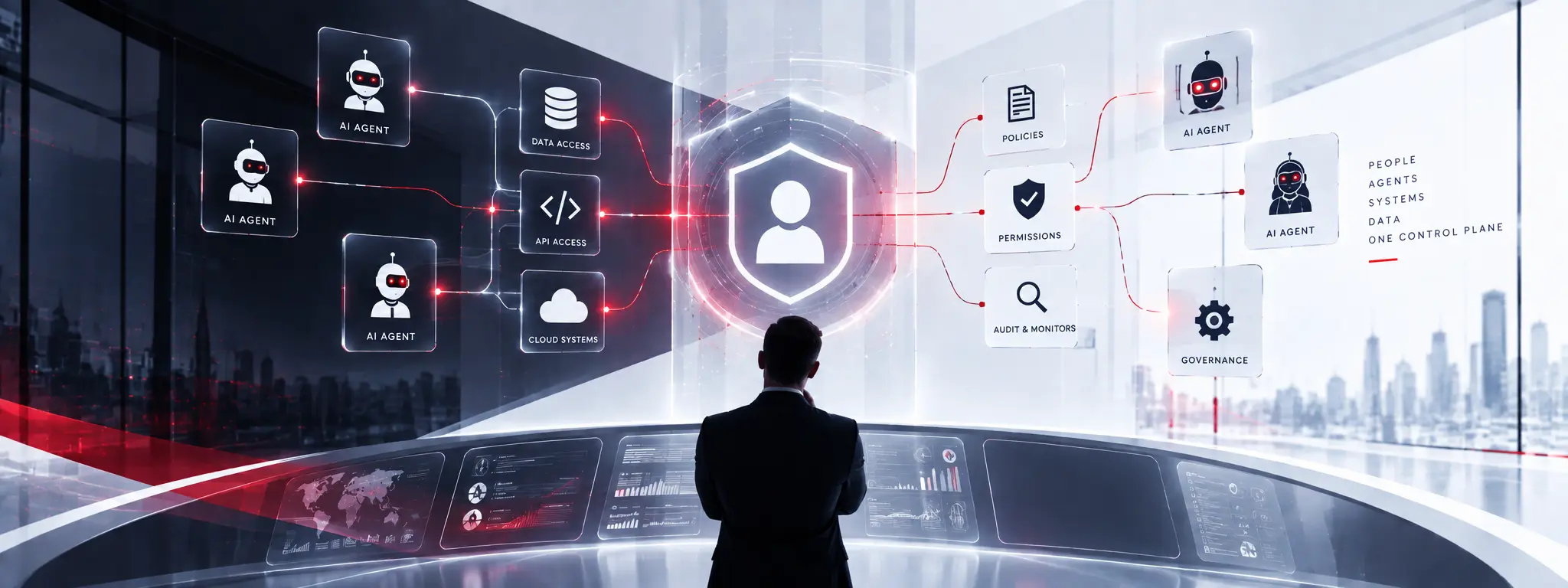

This guide explains what identity threat detection and response is, why it matters, and how to evaluate the right platform for your organisation.
Table of Contents
- What Is Identity Threat Detection and Response (ITDR)?
- Understanding the Risks ITDR Is Designed to Address
- What Makes a Strong ITDR Solution?
- Key Features to Look for in an ITDR Platform
- Why Continuous Identity Monitoring Is Critical
- ITDR and Zero Trust Architecture
- How AI Improves Identity Threat Detection Accuracy
- Evaluating ITDR Solutions: Questions Every Enterprise Should Ask
- Identity Incident Response Capabilities to Consider
- Common Mistakes When Selecting an ITDR Solution
- How Trevonix Helps Organisations Strengthen Identity Security
- Conclusion
What Is Identity Threat Detection and Response (ITDR)?
Identity threat detection and response is a security discipline focused on detecting, investigating and responding to threats that involve digital identities, credentials and authentication systems.
Defining ITDR
An itdr solution monitors identity activity across cloud, on-premises and SaaS environments. It analyses authentication events, privilege changes, session behaviour and other identity signals to identify suspicious activity.
Why ITDR Has Become Essential for Modern Enterprise Security
Traditional security tools often focus on endpoints or network traffic. However, many breaches now begin with identity based attacks, making identity security a critical part of enterprise defence. Organisations need cyber threat detection capabilities that can recognise unusual identity behaviour in real time.
Understanding the Risks ITDR Is Designed to Address
- The Rise of Identity-Based Attacks
Attackers increasingly exploit weak passwords, stolen credentials and excessive privileges. These identity based attacks allow adversaries to appear as legitimate users.
- Why Identity-Based Attacks Are Difficult to Detect
Because attackers use valid credentials, conventional cyber threat detection tools may not recognise malicious activity. This is why identity threat detection and response platforms are becoming essential.
- The Business Impact of Compromised Identities
Successful identity based attacks can lead to data breaches, ransomware deployment, regulatory penalties and operational disruption. Effective identity security controls reduce these risks.
What Makes a Strong ITDR Solution?
A robust identity threat detection and response platform should provide the following capabilities.
- Continuous Identity Monitoring
Continuous monitoring is the foundation of effective itdr. The platform should track authentication events, privilege escalations, service account activity and risky user behaviour.
- Advanced Compromised Account Detection
High-quality compromised account detection identifies credential theft, impossible travel, unusual device usage and abnormal access patterns.
- Identity Signal Correlation Across Systems
An effective identity threat detection and response solution should correlate signals from identity providers, endpoints, cloud platforms and security tools.
- Behavioural Analytics and Risk Scoring
Behavioural analytics helps distinguish normal activity from potential identity based attacks. Risk scoring enables security teams to prioritise the most urgent threats.
Key Features to Look for in an ITDR Platform
When evaluating identity threat detection and response products, look for:
- Real-time alerting
- Automated investigation workflows
- Strong compromised account detection
- Integration with SIEM and SOAR platforms
- Support for hybrid and multi-cloud environments
- Identity-centric cyber threat detection analytics
These features improve both identity security visibility and response efficiency.
Why Continuous Identity Monitoring Is Critical
Attackers rarely achieve their objectives immediately. They often perform reconnaissance, test credentials and escalate privileges over time. Continuous monitoring enables identity threat detection and response platforms to identify these patterns early.
Without continuous monitoring, compromised account detection may occur only after significant damage has already been done.
ITDR and Zero Trust Architecture
Zero Trust assumes that no user or device should be trusted by default. Identity threat detection and response strengthens Zero Trust by continuously validating identity behaviour and detecting suspicious access attempts.
Organisations implementing Zero Trust should consider a Zero Trust identity architecture that combines identity governance, privileged access management and itdr capabilities.
How AI Improves Identity Threat Detection Accuracy
Modern itdr platforms use AI and machine learning to improve cyber threat detection accuracy.
AI can identify:
- Unusual login times
- Abnormal resource access
- Privilege escalation patterns
- Lateral movement indicators
- Credential misuse associated with identity based attacks
AI also reduces alert fatigue by filtering benign anomalies and improving compromised account detection precision.
Evaluating ITDR Solutions: Questions Every Enterprise Should Ask
Before selecting an identity threat detection and response solution, ask:
- Does it support all major identity providers?
- Can it detect both human and non-human identity threats?
- How effective is its compromised account detection?
- Does it provide automated response actions?
- Can it integrate with existing identity security tools?
- Does it enhance broader cyber threat detection operations?
The answers will help determine whether the platform fits your security architecture.
Identity Incident Response Capabilities to Consider
Detection alone is not enough. A strong identity threat detection and response platform should support:
- Session termination
- Account quarantine
- MFA enforcement
- Privilege revocation
- Automated investigation workflows
Rapid response reduces the impact of identity based attacks and improves overall identity security resilience.
Common Mistakes When Selecting an ITDR Solution
Avoid these common errors:
- Treating itdr as just another SIEM feature
- Ignoring service accounts and workload identities
- Focusing only on detection, not response
- Choosing a tool with weak compromised account detection
- Failing to align the solution with Zero Trust initiatives
These mistakes can leave critical identity risks uncovered.
How Trevonix Helps Organisations Strengthen Identity Security
Trevonix helps enterprises strengthen identity security through identity governance, privileged access management, Zero Trust strategy and advanced identity threat detection and response capabilities.
By integrating identity analytics, cyber threat detection workflows and automated response actions, Trevonix enables organisations to identify suspicious identity activity quickly and respond before attackers can escalate access.
Conclusion
Choosing the right identity threat detection and response solution is no longer optional for modern enterprises. As identity based attacks become more sophisticated, organisations need itdr platforms that provide continuous monitoring, accurate compromised account detection, behavioural analytics and automated response capabilities.
The best identity threat detection and response solutions integrate seamlessly with broader identity security and cyber threat detection strategies while supporting Zero Trust initiatives.
By evaluating visibility, analytics, response automation and integration capabilities, organisations can select an itdr platform that not only detects threats but also strengthens long-term identity security resilience.