In today’s digital world, where cyber threats are growing more sophisticated and remote work is the norm, protecting access to sensitive data is more important than ever. Enterprises need advanced IAM technologies to secure systems, simplify user access, and ensure compliance.
Identity and Access Management technologies have evolved from traditional password-based systems to smart, adaptive tools that enhance user experience without compromising security. These IAM technology tools are not just a security layer—they’re foundational for digital transformation.
This blog dives deep into the key components, features, benefits, and future trends of identity management technology, while exploring the top IAM technology tools reshaping the industry today.
Table of Contents
- What Are IAM Technologies?
- Core Components of Identity and Access Management Technologies
- Key Features of Modern Identity Management Technology
- Top IAM Technology Tools
- Benefits of Using Advanced IAM Tools
- Trends Shaping the Future of IAM Technologies
- How to Choose the Right IAM Technology for Your Business
- Conclusion
What Are IAM Technologies?
IAM technologies, or Identity and Access Management technologies, refer to the frameworks, tools, and systems that help organizations manage digital identities and control who can access what information. The primary objective is to ensure that only authorized individuals can access specific data, applications, or resources, based on predefined roles or policies.
Identity and access management technologies span a range of solutions—from password management and biometric authentication to Single Sign-On (SSO), Multi-Factor Authentication (MFA), and Privileged Access Management (PAM).
Modern IAM technology tools are increasingly AI-driven, cloud-based, and user-centric, focusing not only on protection but also on ease of use and scalability.
Core Components of Identity and Access Management Technologies
To truly understand the value of IAM technologies, it’s essential to explore their core components. These components define how digital identities are created, managed, and secured.
1. Authentication
Authentication is the process of verifying a user’s identity before granting access.
- Multi-Factor Authentication (MFA): Combines something you know (password), something you have (mobile device), and something you are (fingerprint or facial recognition).
- Single Sign-On (SSO): Allows users to log in once and access multiple systems without re-authenticating.
- Biometric Login: Uses fingerprint, voice, facial, or iris recognition to verify identity.
These mechanisms are critical IAM technology tools for modern businesses that prioritize secure and seamless user access.
2. Authorization
Once authenticated, users must be granted access only to the resources they are allowed to use.
- Role-Based Access Control (RBAC): Assigns access rights based on the user's job role.
- Policy Enforcement Points (PEPs): Enforce defined access policies across various systems.
Authorization is a crucial part of identity and access management technologies, ensuring security and compliance.
3. User Provisioning and Deprovisioning
This refers to the automation of user account creation and deletion:
- Provisioning: Automatically sets up user access to systems when onboarding.
- Deprovisioning: Revokes access when a user leaves or changes roles.
Effective identity management technology ensures this lifecycle is smooth, reducing the risk of orphan accounts or insider threats.
4. Access Governance
Governance involves monitoring and auditing user access rights.
- Access reviews
- Certification processes
- Audit trails and reporting
These features enable organizations to demonstrate compliance with regulations like GDPR, HIPAA, and SOX, making them integral to IAM technologies.
Key Features of Modern Identity Management Technology
Today’s digital ecosystem demands smarter, more adaptive IAM systems. Here are some key features that distinguish modern IAM technology tools:
- Cloud-Native Architecture: Offers flexibility and scalability for remote work and hybrid environments.
- AI and Machine Learning: Detects anomalies, predicts threats, and automates access control.
- Self-Service Portals: Empowers users to reset passwords, request access, and manage profiles.
- API-Based Integration: Seamlessly connects IAM with other business applications and tools.
- Context-Aware Access: Factors such as location, device, and time of access are considered before granting entry.
- Mobile Device Support: Extends secure access to smartphones and tablets.
- Delegated Administration: Allows different departments to manage access for their teams without compromising global security.
These functionalities elevate traditional IAM into robust identity and access management technologies fit for modern enterprises.
Top IAM Technology Tools
Here’s a list of leading IAM technology tools widely adopted across industries:
1. Ping Identity
Ping Identity provides intelligent identity solutions, including SSO, MFA, and directory services. Known for its hybrid and cloud IAM capabilities, it helps enterprises achieve Zero Trust security.
2. Okta
Okta is a leading cloud-based IAM provider offering directory services, lifecycle management, and secure access across all devices.
3. Microsoft Entra ID (formerly Azure AD)
A key component of Microsoft’s cloud ecosystem, it offers advanced access control, RBAC, and conditional access policies.
4. IBM Security Verify
IBM’s IAM suite includes user provisioning, risk-based access, and adaptive authentication. It supports complex enterprise environments.
All these tools contribute significantly to the evolution of IAM technologies, improving efficiency, security, and compliance.
Benefits of Using Advanced IAM Tools
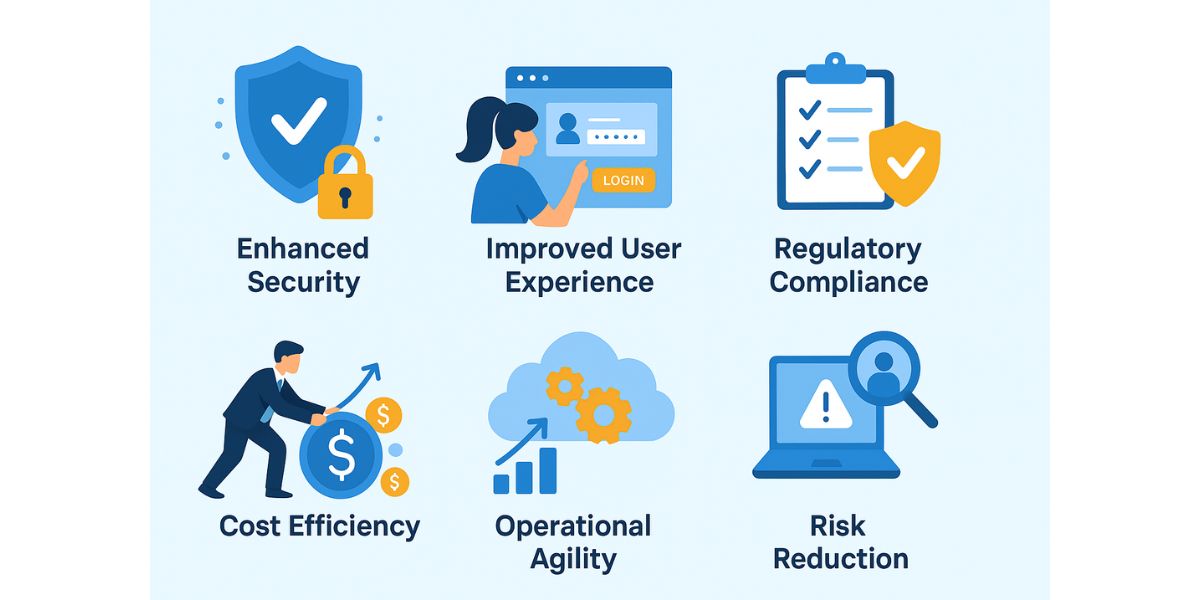
Deploying modern identity management technology has several transformative benefits:
1. Enhanced Security
Strong authentication and granular authorization reduce the risk of data breaches and unauthorized access.
2. Improved User Experience
SSO and passwordless logins eliminate login fatigue and streamline access across applications.
3. Regulatory Compliance
Tools ensure compliance with GDPR, HIPAA, PCI-DSS, and other standards through audits, reporting, and policy enforcement.
4. Cost Efficiency
Automated provisioning and centralized access reduce the burden on IT teams and lower administrative costs.
5. Operational Agility
With cloud IAM, businesses can scale securely and support remote work environments without compromising performance.
6. Risk Reduction
AI-driven threat detection and real-time access monitoring help reduce insider threats and external attacks.
Clearly, IAM technology tools are essential not just for IT security but also for business continuity and innovation.
Trends Shaping the Future of IAM Technologies
Several trends are influencing how identity and access management technologies evolve:
1. Passwordless Authentication
The shift from passwords to biometrics and device-based logins is improving both security and usability. Click here to read more about Passwordless Authentication
2. Zero Trust Architecture
IAM is central to the Zero Trust model, where no entity is trusted by default, even within the network.
3. Decentralized Identity (DID)
Blockchain-based identity solutions offer users greater control over their digital identities.
4. AI and Behavior Analytics
IAM systems are becoming proactive, detecting and responding to threats based on user behavior patterns.
5. Cloud-First IAM
As businesses migrate to cloud infrastructure, cloud-native IAM technologies are becoming standard.
6. Identity as a Service (IDaaS)
Offered as a SaaS model, IDaaS is enabling small and mid-sized businesses to access advanced IAM capabilities affordably.
These trends will define the next generation of IAM technologies, making identity-centric security the backbone of digital enterprises.
How to Choose the Right IAM Technology for Your Business
Selecting the right IAM technology tools depends on multiple factors:
1. Business Size and Structure
A large enterprise with multiple departments and remote workers will need more advanced IAM solutions than a small business.
2. Regulatory Requirements
Industries like healthcare, finance, and education must comply with strict data privacy laws.
3. Existing Infrastructure
Look for tools that integrate well with your current cloud services, databases, and applications.
4. User Types and Access Needs
Assess who needs access (employees, partners, customers) and their required level of permissions.
5. Budget and ROI
Ensure the IAM system is scalable and offers measurable cost and security benefits.
6. Vendor Support and Training
Good documentation, support, and community access are essential for long-term success.
An informed decision can ensure the identity management technology you adopt supports growth, security, and compliance goals efficiently.
Conclusion
As organizations grow and embrace digital transformation, IAM technologies are becoming more than a security measure—they are an enabler of innovation and trust. From cloud computing to mobile workforces, managing identities securely and efficiently is the cornerstone of modern business success.
By investing in the right identity and access management technologies, organizations can protect sensitive information, streamline operations, and provide seamless user experiences. Whether it's identity management technology for employees, partners, or customers, the right IAM technology tools make all the difference.
Companies like Trevonix are at the forefront of delivering intelligent, scalable, and secure IAM solutions that help businesses stay ahead of the curve. With expertise in deploying industry-leading IAM platforms and tailoring them to specific organizational needs, Trevonix ensures your digital identity strategy is strong, future-ready, and fully aligned with your security goals.