
Expanding Scope of the Vercel Breach
Cloud platform Vercel has revealed that more customer accounts were compromised than initially reported in its April 2026 security incident. The breach, originally traced to a third party AI tool, exposed weaknesses in how access and permissions are managed across interconnected systems.
Further investigation showed that some accounts displayed signs of compromise even before the main incident, indicating a broader and more persistent attack surface than first understood.
The Role of AI and OAuth in the Attack
The breach originated from a compromised AI tool that had been granted extensive OAuth permissions. This allowed attackers to move laterally across systems after gaining access to an employee’s workspace account.
This highlights a critical issue in modern architectures
When third party tools are given excessive permissions, they can effectively become entry points into core enterprise environments
The incident also underscores how AI integrations are expanding the attack surface, particularly when combined with weak access controls and token based authentication mechanisms
A Supply Chain Security Wake Up Call
The Vercel incident is not an isolated case. It reflects a growing trend of supply chain attacks where vulnerabilities in external tools or partners are exploited to gain access to larger ecosystems
Attackers are increasingly targeting
- Third party integrations
- Developer tools and platforms
- Identity tokens and environment variables
This shift demonstrates that security is no longer limited to internal systems but must extend across the entire digital supply chain
Trevonix Perspective
At Trevonix, this incident reinforces a critical reality
Identity is now the primary attack surface
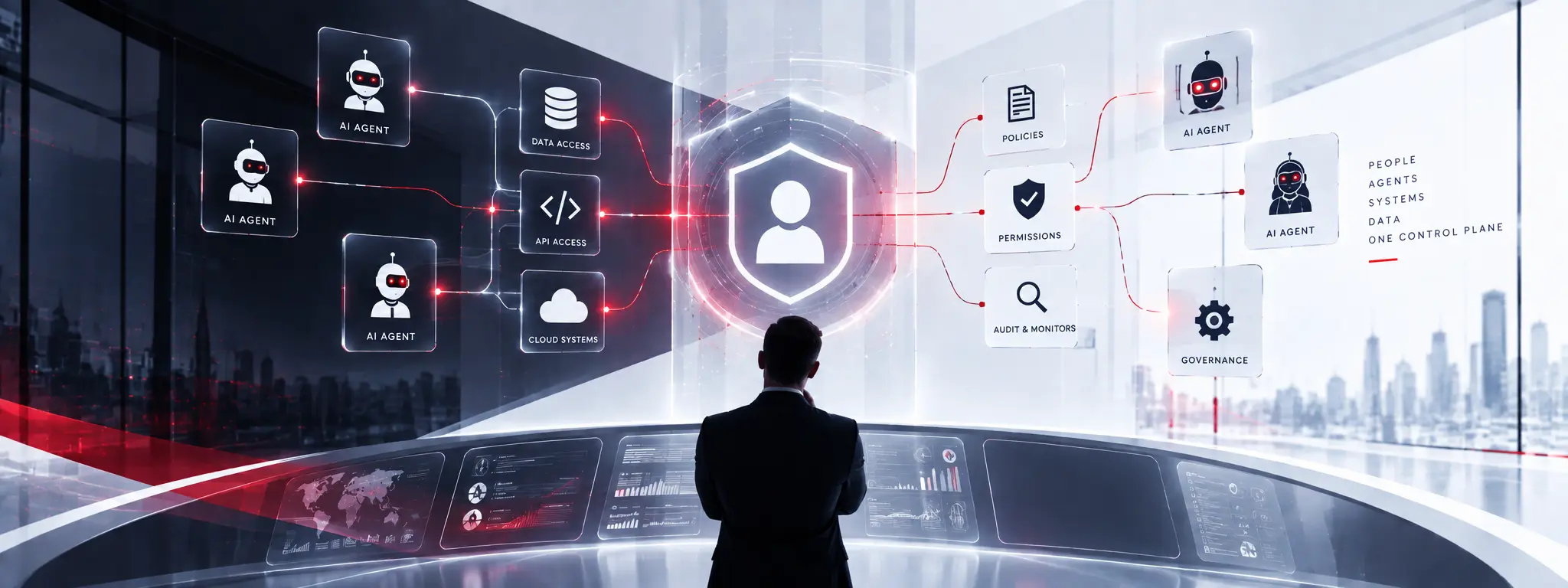
As organisations integrate AI tools and cloud platforms, the traditional boundaries of security are dissolving. Access is no longer confined to users logging into systems. It extends to applications, services and AI driven agents interacting continuously
To address this, organisations must
- Treat OAuth tokens and API keys as high risk identities
- Implement strict least privilege access across all integrations
- Continuously monitor identity behaviour rather than relying on one time authentication
- Extend governance to third party and non human identities
Most importantly, identity must act as a continuous control layer rather than a one time checkpoint
Conclusion
The Vercel breach highlights the increasing complexity of modern cyber threats, particularly in environments shaped by AI and interconnected services
Organisations that fail to secure identity across their ecosystem risk exposure not just from direct attacks, but from the weakest link in their supply chain
Reference: https://thehackernews.com/2026/04/vercel-finds-more-compromised-accounts.html