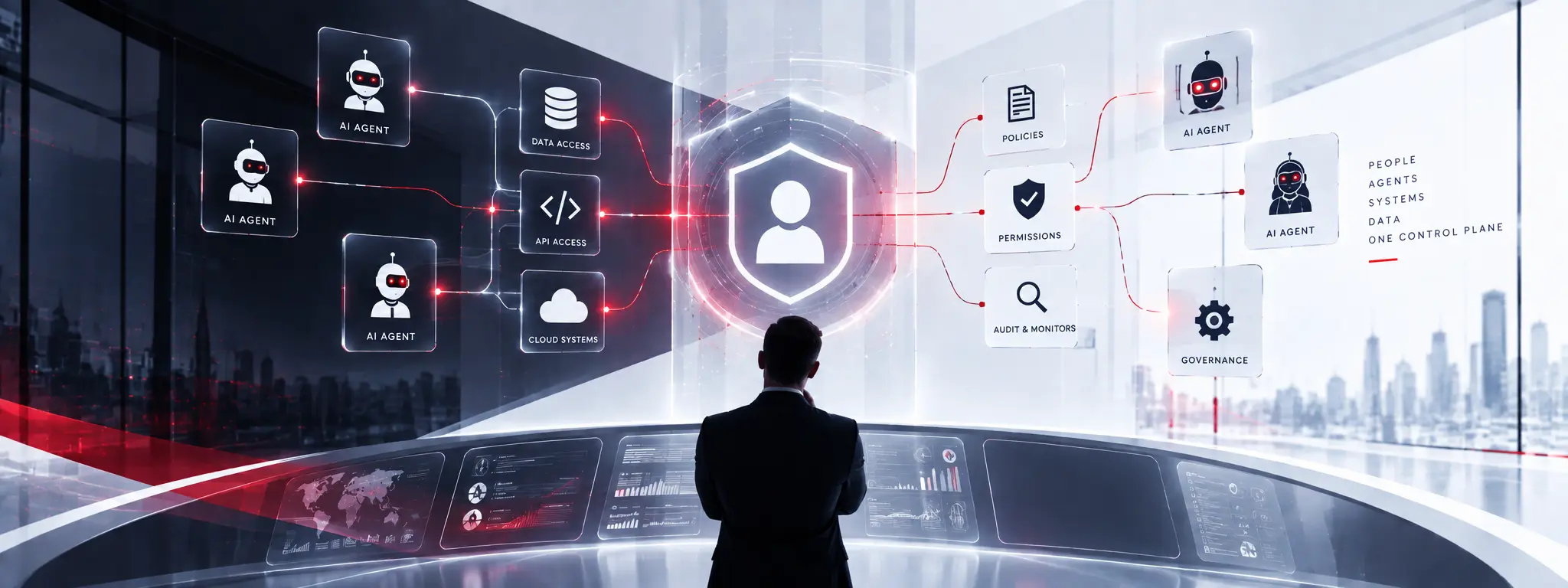

The cybersecurity landscape is undergoing a fundamental transformation. AI is no longer just an innovation driver — it has become a powerful tool for cybercriminals. Attackers now use AI to mimic human behavior, generate synthetic identities, and automate social engineering attacks, making traditional security controls increasingly ineffective.
Table of Content
- Introduction
- Why Continuous Trust Is the New Security Standard
- The Role of AI in the Future of Digital Trust
- Trevonix Perspective
- Reference
For years, identity security has been built on a simple assumption: authenticate once, then trust. But this model no longer reflects reality. Modern attacks rarely stop at login. They target account recovery processes, support desk verification, high-risk transactions, and post-authentication privilege escalation.
This is where the evolution of Universal Services by Ping Identity marks a critical shift — from point-in-time authentication to continuous identity trust.
Instead of treating trust as a single event, Universal Services introduces a persistent trust layer that validates identity across every interaction point. Trust becomes dynamic, adaptive, and intelligence-driven — evolving with user behavior, risk signals, and contextual data.
Why Continuous Trust Is the New Security Standard
Modern digital ecosystems are complex: cloud platforms, SaaS applications, APIs, remote workforces, partners, and customers all operate across interconnected environments. In this reality, identity is no longer just a security control — it is the primary security perimeter.
Continuous trust enables organizations to:
- Secure high-risk moments beyond login
- Protect account recovery and support interactions
- Reduce fraud and identity misuse
- Adapt security dynamically based on risk
- Deliver seamless, low-friction user experiences
- Maintain trust across the full identity lifecycle
This model transforms identity from a defensive layer into a strategic foundation for digital resilience.
The Role of AI in the Future of Digital Trust
AI is redefining both sides of cybersecurity — attack and defence. While attackers use AI to scale fraud and impersonation, modern identity platforms must use AI to deliver:
- Intelligent risk-based verification
- Continuous behavioral analysis
- Adaptive authentication flows
- Context-aware trust decisions
- Automated identity assurance
Instead of static rules and rigid policies, AI-driven trust models enable security systems to tighten controls when risk rises and reduce friction when trust is high — creating a balance between security and user experience.
In this model, identity becomes living infrastructure — responsive, adaptive, and resilient by design.
Trevonix Perspective
At Trevonix, we view this evolution as a defining shift in digital identity strategy. Continuous trust is no longer a future concept — it is a present-day business necessity. As AI-driven fraud becomes more human-like and adaptive, organizations must move beyond static authentication and fragmented controls toward intelligent, continuous trust systems.
Our approach focuses on helping enterprises adopt these models without disruption — strengthening security architectures, modernising identity frameworks, and embedding trust across every digital interaction. By aligning next-generation identity platforms with business strategy, we help organisations move from reactive security to proactive digital resilience.
This is not just about protecting access — it’s about building trust ecosystems that are secure, scalable, and future-ready.