In the digital era, where cyber threats and data breaches are growing rapidly, ensuring secure access to systems, devices, and networks has become a top priority. Traditional security methods like passwords, PINs, and security questions are no longer enough to protect sensitive information. This is where biometric authentication steps in as a game-changing technology.
Biometric authentication uses unique biological traits—like fingerprints, facial patterns, iris scans, or voice recognition—to verify a person’s identity. It’s fast, reliable, and much harder to fake than traditional methods. Today, biometric authentication is used everywhere—from unlocking smartphones and securing banking apps to verifying employees in corporate systems and safeguarding national borders.
In this blog, we’ll explore what biometric authentication is, how it works, its various types, methods, examples, and its role in cybersecurity and network security. We’ll also discuss its advantages, challenges, and how artificial intelligence (AI) is shaping the future of biometric systems.
Table of Contents
- What Is Biometric Authentication?
- How Does Biometric Authentication Work?
- Types of Biometric Authentication
- Common Biometric Authentication Methods
- Examples of Biometric Authentication
- Importance of Biometric Authentication in Cybersecurity
- Role of Biometric Authentication in Network Security
- Advantages of Biometric Authentication
- Challenges and Limitations
- AI-driven Biometric Analysis
- Conclusion
What Is Biometric Authentication
Definition in Simple Terms
Biometric authentication is a security process that verifies a person’s identity using their biological or behavioral characteristics. In simple terms, it’s a method that checks who you are rather than what you know (like a password) or what you have (like a security token).
Biometrics rely on features that are unique to each person, such as fingerprints, facial structure, iris patterns, or even voice. Because these traits are nearly impossible to duplicate, biometric authentication provides a much higher level of security compared to traditional methods.
Difference from Traditional Authentication
Traditional authentication methods—like passwords, PINs, and smart cards—depend on external factors that can be stolen, guessed, or shared. For example:
- Passwords can be hacked or leaked.
- PINs can be observed or guessed.
- Cards or tokens can be lost or duplicated.
In contrast, biometric authentication uses something inherent to the individual. You can’t forget your fingerprint, misplace your face, or share your iris pattern. This makes it a much safer and more convenient way to prove identity.
Role in Cybersecurity and Network Security
Biometric authentication in cybersecurity plays a critical role in protecting digital systems, ensuring that only authorized users gain access to sensitive data. It adds an extra layer of protection against identity theft, phishing attacks, and unauthorized logins.
Similarly, biometric authentication in network security strengthens how users access internal systems, cloud services, and enterprise applications. It’s increasingly used in businesses to secure remote access, VPNs, and network endpoints.
How Does Biometric Authentication Work?

The working of biometric authentication involves three major steps: enrollment, storage, and verification.
1. Enrollment
The user’s biometric data (like a fingerprint or facial scan) is captured and stored as a mathematical model or encrypted template. The raw image is not stored, ensuring privacy and security.
2. Storage
The encrypted template is stored securely in a local device, database, or cloud environment. The storage method depends on the system’s design and security needs.
3. Verification or Matching
When a user attempts to access a system, a fresh biometric sample is captured and compared with the stored template. If the data matches, access is granted; if not, it’s denied.
This process ensures quick and accurate identity verification. Advanced algorithms and machine learning models enhance the precision and speed of biometric matching.
Types of Biometric Authentication
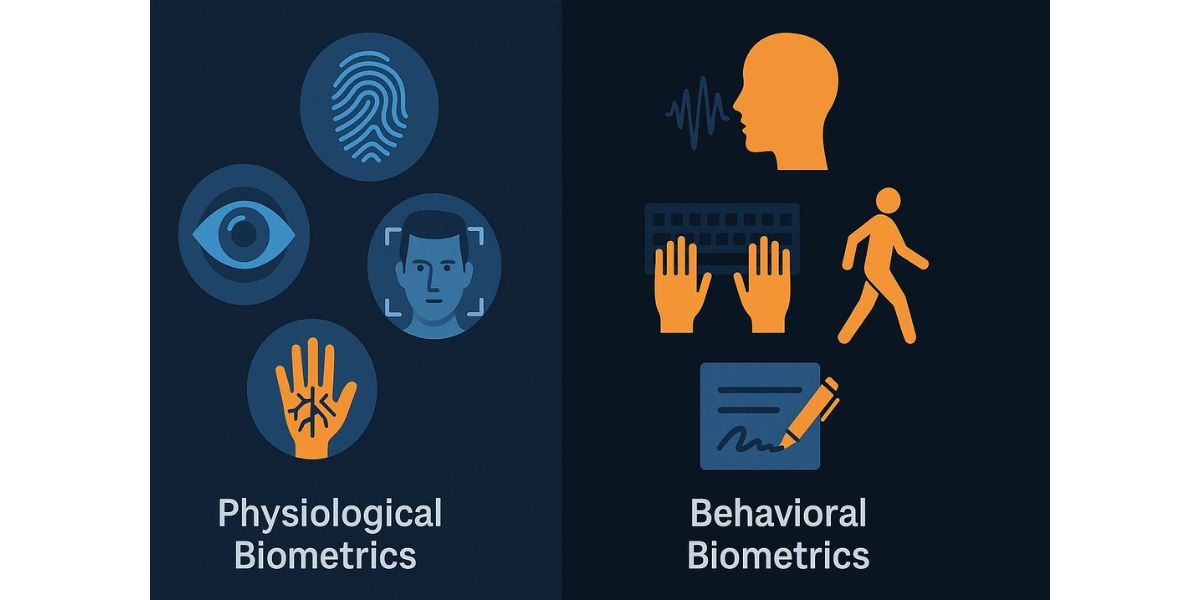
There are two main types of biometric authentication: physiological and behavioral.
1. Physiological Biometrics
These are based on a person’s physical characteristics, such as:
- Fingerprints
- Iris patterns
- Facial features
- DNA
- Palm veins
Physiological biometrics remain stable over time and are difficult to fake or alter.
2. Behavioral Biometrics
These focus on unique behavioral patterns of individuals, such as:
- Voice recognition
- Typing rhythm
- Gait (the way a person walks)
- Signature dynamics
Behavioral biometrics are often used as an additional layer of verification in modern authentication systems.
By combining both physiological and behavioral features, biometric authentication methods achieve stronger security and improved accuracy.
Common Biometric Authentication Methods

Organizations and individuals use several biometric authentication methods depending on their needs, budget, and technology infrastructure. Here are the most common ones:
1. Fingerprint Recognition
One of the oldest and most widely used methods. A sensor scans the ridges and patterns of a finger to verify identity. Used in smartphones, laptops, and secure access control systems.
2. Facial Recognition
Facial recognition analyzes the unique features of a face—such as distance between eyes, nose shape, and jawline—to authenticate users. Popular in smartphones, airports, and surveillance systems.
3. Iris Recognition
Iris scanners capture the intricate patterns of a person’s iris, which are unique and stable over time. Used in high-security facilities and government ID systems.
4. Voice Recognition
Voice-based authentication analyzes vocal characteristics like tone, pitch, and rhythm. Useful in call centers, voice assistants, and banking services.
5. Palm or Vein Recognition
This method scans the unique vein pattern under the skin of a person’s palm or hand. It’s highly secure and contactless.
6. Behavioral Recognition
Tracks user behavior—such as typing style, mouse movements, or walking patterns—to detect anomalies or verify identity continuously.
These biometric authentication methods are used across industries, enhancing user convenience while maintaining strong protection against cyber threats.
Examples of Biometric Authentication
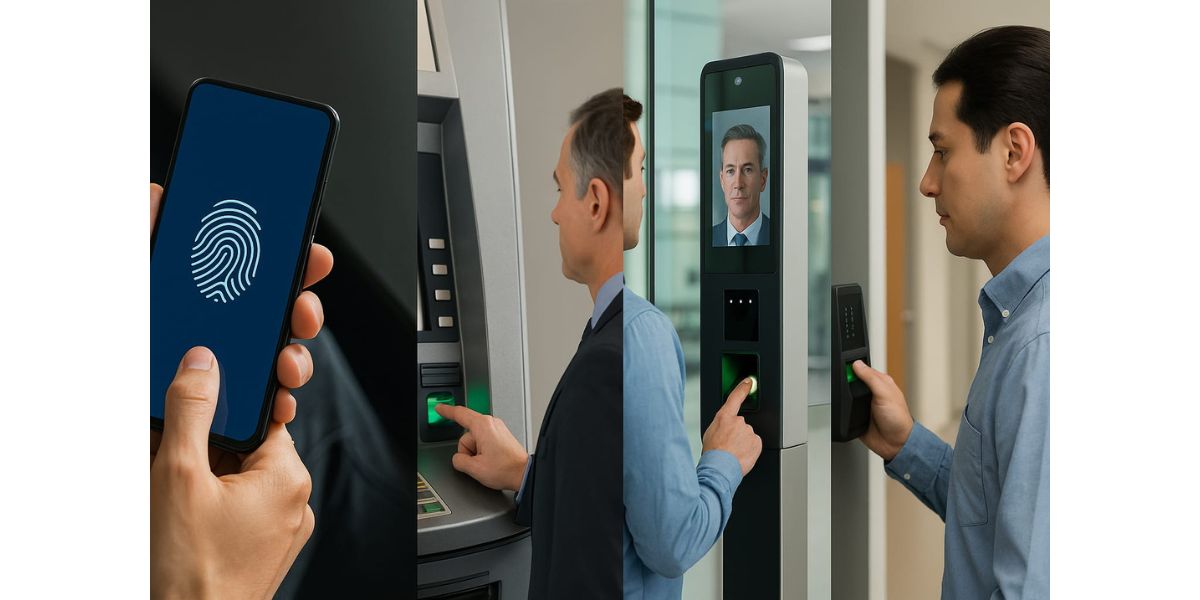
Let’s look at some real-world biometric authentication examples you might encounter daily:
1. Smartphones and Laptops
Unlocking your phone using a fingerprint sensor or facial scan (like Apple Face ID) is one of the most common biometric authentication examples.
2. Banking and Financial Services
Banks use biometric authentication for customer verification in mobile apps and ATMs, reducing fraud and ensuring secure transactions.
3. Airports and Border Control
Automated passport control systems use facial or iris recognition to speed up immigration processes while maintaining security.
4. Workplaces and Corporate Systems
Businesses use fingerprint or facial scanners to manage employee attendance and secure building access.
5. Healthcare and Government ID Systems
Hospitals, national ID programs, and law enforcement agencies rely on biometric authentication for identity verification and record management.
Each of these biometric authentication examples shows how biometrics simplify security while strengthening access control across multiple sectors.
Importance of Biometric Authentication in Cybersecurity
Biometric authentication in cybersecurity is revolutionizing how organizations protect digital assets. Cybercriminals frequently exploit weak passwords or stolen credentials to infiltrate systems. By replacing or supplementing passwords with biometrics, companies significantly reduce these risks.
Key Benefits in Cybersecurity
- Stronger Identity Verification: Biometrics confirm who the user really is.
- Reduced Phishing and Credential Theft: There are no passwords to steal or share.
- Multi-Factor Authentication (MFA): Combining biometrics with tokens or passwords enhances protection.
- Compliance and Data Protection: Many cybersecurity frameworks now encourage biometric-based access controls.
As cyberattacks become more sophisticated, biometric authentication in cybersecurity ensures that even if one security layer is compromised, identity verification remains intact.
Role of Biometric Authentication in Network Security
Biometric authentication in network security ensures that only authorized individuals can connect to private networks or cloud environments. This protects sensitive data from unauthorized access.
Applications in Network Security
- VPN Access Control: Employees authenticate with biometrics before connecting remotely.
- Zero Trust Networks: Every access request is verified biometrically, reducing insider threats.
- Secure IoT Devices: Biometric systems safeguard smart devices and industrial networks.
- Cloud-Based Systems: Enterprises use biometrics to secure login to cloud applications and servers.
In today’s distributed work environments, biometric authentication in network security is critical for preventing unauthorized access and ensuring accountability.
Advantages of Biometric Authentication
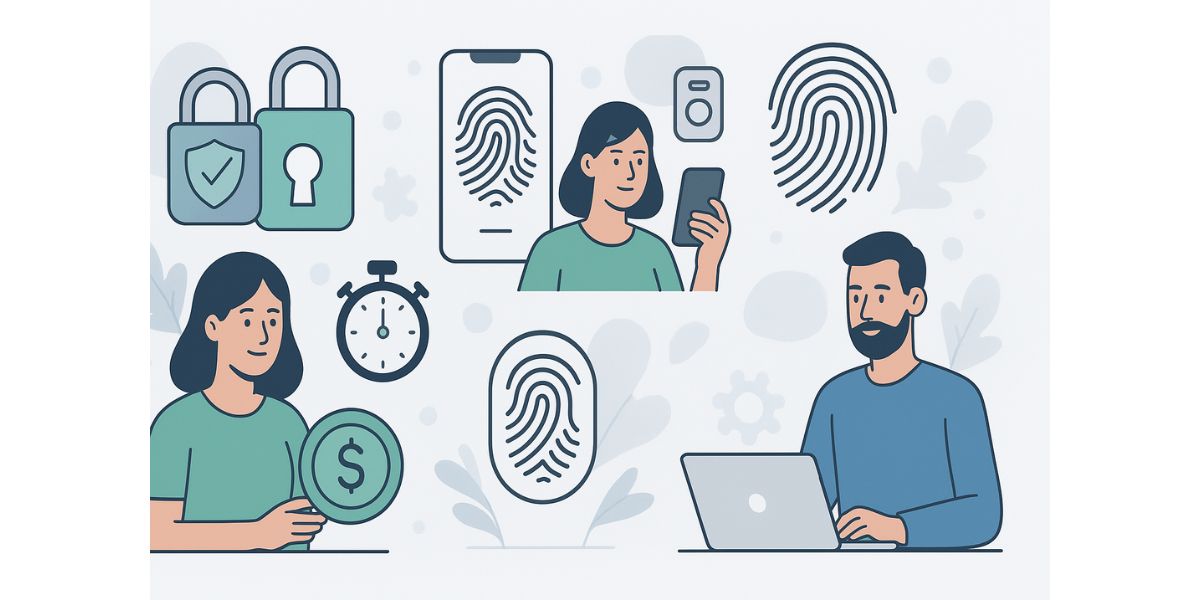
The growing adoption of biometric authentication comes from its numerous benefits over traditional security measures.
1. Enhanced Security
Biometric traits are unique to each person, making duplication or forgery nearly impossible.
2. User Convenience
No need to remember complex passwords or carry access cards. A quick fingerprint or facial scan is all it takes.
3. Speed and Efficiency
Authentication takes only seconds, improving both security and user experience.
4. Non-transferable
Biometric credentials belong to one person only and cannot be shared, which helps maintain integrity.
5. Cost-Effective in the Long Run
Though initial setup may be costly, biometric systems reduce password resets, helpdesk calls, and security breaches over time.
6. Scalable for Businesses
From small startups to large enterprises, biometric authentication methods can be scaled and integrated easily into existing systems.
Challenges and Limitations
Despite its strengths, biometric authentication has some challenges that need attention.
1. Privacy Concerns
Biometric data is sensitive. If compromised, it cannot be changed like a password. Proper encryption and storage practices are essential.
2. False Rejections or Acceptances
No system is perfect—biometric devices may sometimes misidentify users due to poor lighting, sensor quality, or environmental factors.
3. Cost and Implementation
High-quality scanners and AI-powered systems can be expensive, making adoption difficult for small organizations.
4. Data Security Risks
If biometric templates are stored in centralized databases, they become potential targets for hackers. Secure storage and encryption are vital.
5. Ethical and Legal Issues
Different countries have regulations about collecting and storing biometric data. Organizations must comply with these laws to avoid legal risks.
Addressing these challenges will help make biometric authentication more secure, ethical, and accessible.
AI-driven Biometric Analysis
Artificial intelligence (AI) plays a transformative role in biometric authentication. AI-powered algorithms improve accuracy, detect spoofing attempts, and adapt to changes in a person’s biometric data over time.
AI Enhancements Include:
- Deep Learning Models for facial and voice recognition
- Liveness Detection to prevent fake biometric inputs like photos or recordings
- Continuous Authentication based on behavioral biometrics
- Adaptive Learning Systems that evolve with user patterns
AI not only strengthens biometric authentication in cybersecurity but also enhances biometric authentication in network security, ensuring continuous protection against advanced cyber threats.
Conclusion
Biometric authentication has redefined digital security by combining accuracy, speed, and convenience. It eliminates the weaknesses of passwords and traditional verification methods, making identity protection smarter and stronger. Whether it’s unlocking a device, securing a company network, or ensuring safe online banking, biometrics provide a future-ready solution for individuals and organizations alike.
However, like all technologies, it must be implemented responsibly—with proper encryption, data protection, and ethical handling of personal information. As AI continues to evolve, biometric authentication methods will become even more secure, adaptive, and reliable.
At Trevonix, we understand the importance of building trust in digital identity. Headquartered in London, Trevonix is a global leader in identity and access management solutions that empower businesses to strengthen biometric authentication in cybersecurity and biometric authentication in network security. Our expertise helps organizations protect user identities, secure networks, and ensure compliance in a rapidly changing digital landscape.