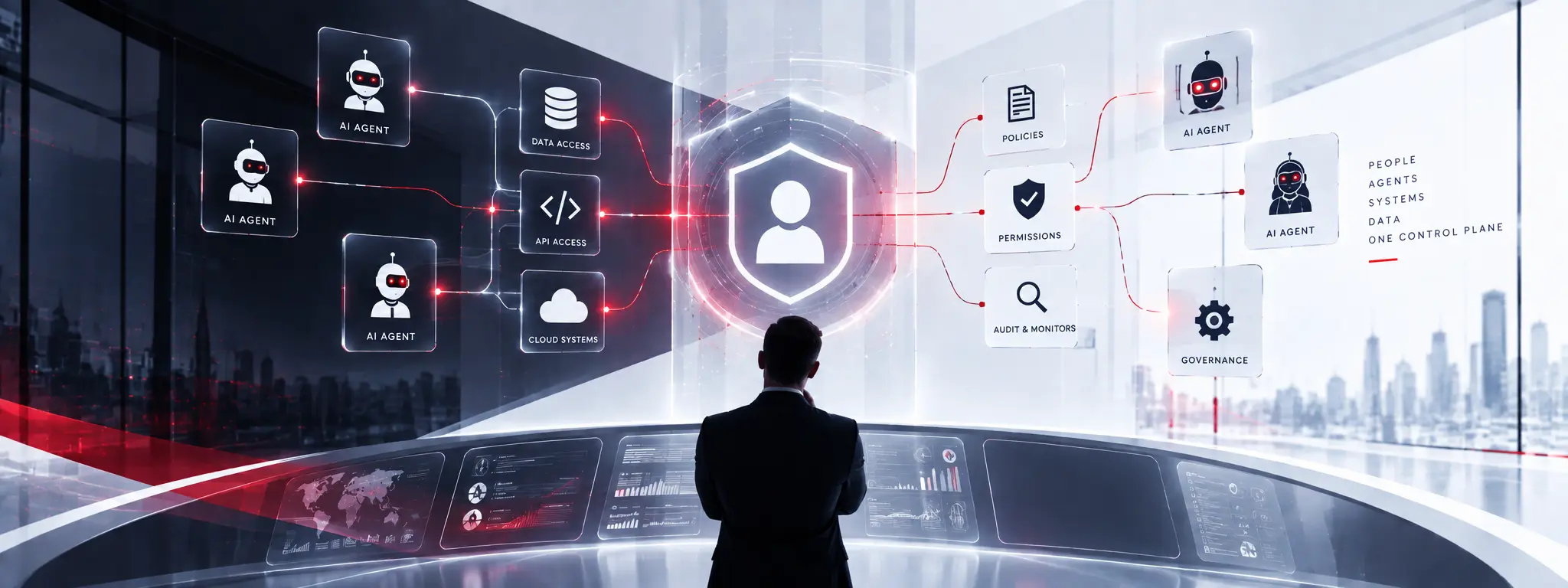
.png)
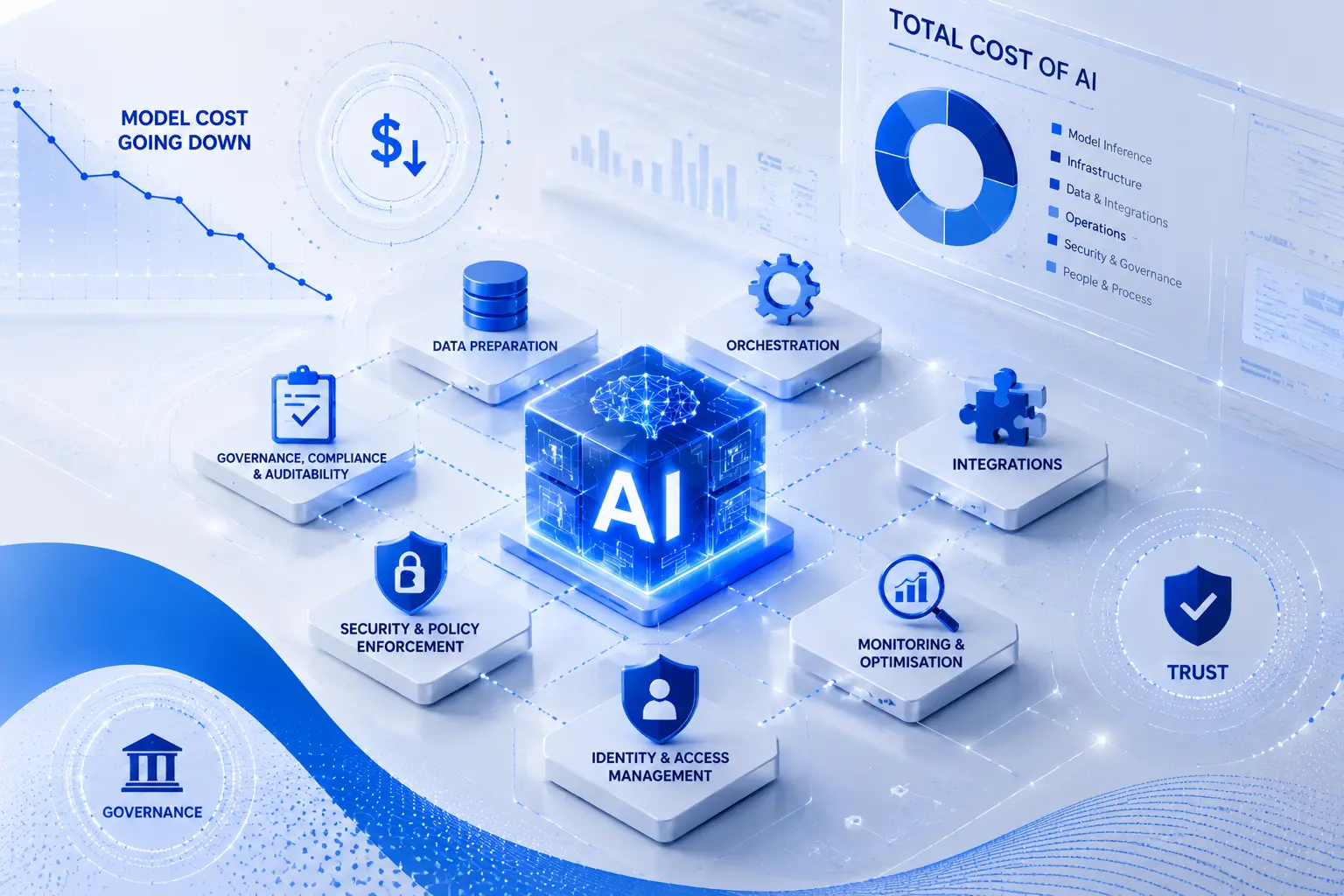
Over the past year, AI providers have consistently reduced the cost of inference, making powerful models more accessible than ever. Smaller models are becoming increasingly capable, competition is driving prices down and organisations can now access advanced AI at a fraction of what it cost just a few years ago.
At first glance, this suggests enterprise AI should also be becoming significantly less expensive.
In reality, many organisations are discovering the opposite.
While the cost of running a model continues to fall, the overall cost of deploying, securing and governing AI across an enterprise remains substantial. The model itself is only one component of a much larger ecosystem. As AI moves from experimentation to business-critical operations, organisations are beginning to realise that cheaper models do not automatically mean cheaper AI.
The Model Is Only One Piece of the Puzzle
When organisations evaluate AI costs, model pricing often receives the most attention. Yet inference represents only a small part of the overall investment.
Enterprise AI depends on a wide range of supporting capabilities, including data pipelines, orchestration platforms, API integrations, vector databases, monitoring, governance, identity management and security controls. These components ensure AI operates reliably, securely and in compliance with organisational policies.
As AI deployments grow, the surrounding architecture often becomes more expensive than the model itself.
Understanding the True Cost of AI
Much like cloud computing introduced the concept of Total Cost of Ownership, enterprise AI requires a broader framework for evaluating investment. A Total Cost of AI (TCoAI) model should extend beyond inference costs and consider the full operational lifecycle of an AI solution.
This includes:
- AI orchestration and workflow automation
- Data preparation and ongoing management
- Enterprise integrations
- Identity and access management
- Security controls and policy enforcement
- Governance, compliance and auditability
- Human review and decision validation
- Monitoring, optimisation and incident response
- Failure handling and operational resilience
These capabilities are essential for moving AI from proof of concept to production and often represent the largest long-term investment.
Hidden Costs Increase as AI Scales
As organisations deploy AI across multiple departments, new operational challenges begin to emerge.
AI outputs require validation, business rules evolve, regulations change and models need continuous monitoring. Integrations must be maintained, permissions reviewed and governance policies updated as new AI use cases are introduced.
These ongoing activities rarely appear in initial business cases, yet they become critical to maintaining reliable and secure AI services over time.
The cost of operating AI therefore grows beyond infrastructure and becomes an organisational capability.
Identity and Governance Are Cost Enablers
Security and governance are often viewed as additional costs, but they are increasingly becoming essential enablers of enterprise AI.
Without clear identity controls, organisations struggle to understand who is using AI, what information is being accessed and how AI actions should be governed. Poor visibility can lead to unnecessary AI consumption, duplicated workloads and increased operational risk.
Identity, least privilege access and policy-based governance not only strengthen security but also help organisations optimise AI usage, control costs and ensure accountability across the enterprise.
In many cases, effective governance reduces long-term costs by preventing inefficient or uncontrolled AI adoption.
Looking Beyond Inference
As AI continues to mature, organisations need to move beyond comparing models solely on price per token or inference costs.
The more meaningful question is not "Which model is cheapest?" but "Which solution delivers the greatest business value at the lowest total operational cost?"
This requires evaluating AI as an enterprise capability rather than a standalone technology. Procurement decisions should consider long-term operational requirements, governance maturity, integration complexity and organisational readiness alongside model performance.
Final Thoughts
The falling cost of AI models is an important milestone, but it represents only one part of the enterprise AI equation.
The organisations that achieve sustainable AI adoption will be those that understand the Total Cost of AI, balancing model efficiency with governance, identity, security and operational resilience. These capabilities may not always appear on a pricing page, but they often determine whether an AI initiative succeeds or struggles at scale.
Ultimately, the future of enterprise AI will not be shaped by the cheapest models. It will be shaped by organisations that understand the true economics of deploying AI responsibly, securely and sustainably.