
Table of Contents
- Introduction
- What Are AI Agents?
- Why AI Security Matters
- Key Market Drivers in 2026
- Key Technologies in AI Security
- Use Cases: AI Agent Security in Action
- Challenges Facing the Market
- What to Expect in the Coming Years
- Conclusion
What Are AI Agents?
An AI agent is a system that can autonomously perceive inputs, make decisions based on context and execute actions to achieve objectives. Unlike traditional automation scripts, modern agents learn from data, adapt to change and often collaborate with other agents or digital systems.
Core Characteristics of an AI Agent
- Autonomy – Operates without constant human supervision
- Perception – Collects and interprets data from multiple sources
- Decision-making – Applies reasoning models or machine learning algorithms
- Action capability – Executes tasks across connected systems
- Learning ability – Improves performance over time
In 2026, we see various types of AI agent deployments:
- Customer service automation agents
- Cyber defence monitoring agents
- Financial trading agents
- Identity governance agents
- DevOps automation agents
Each AI agent interacts with enterprise systems such as databases, cloud infrastructure, APIs, SaaS platforms and identity management solutions. This high level of connectivity makes them powerful — but it also introduces new risk.
The greater the autonomy of an AI agent, the more essential ai security becomes. Without appropriate safeguards, agents can become entry points for attackers or unintentionally amplify operational errors at scale.
Why AI Security Matters

The expansion of AI-driven automation has created a significantly broader attack surface. Every AI agent processes data, makes decisions and interacts with digital infrastructure. If attackers manipulate inputs, models or execution paths, the resulting damage can be rapid and far-reaching.
1. Expanded Attack Surface
AI agents connect to multiple APIs and backend systems. Each integration point represents a potential vulnerability. Weak authentication controls, misconfigured permissions or exposed endpoints can allow attackers to hijack processes. Strong ai security controls are therefore essential to reduce exposure.
2. Sensitive Data Exposure
An AI agent often processes confidential data such as financial records, customer identities and internal strategy documents. Without mature ai security practices, the risk of data leakage increases significantly.
3. Autonomous Amplification
Unlike human users, an AI agent operates at machine speed. A compromised system could execute thousands of malicious actions in minutes. What would have been a minor breach in a traditional system can escalate rapidly in an AI-driven environment.
4. Identity and Access Risks
AI agents require credentials, tokens and defined permissions. If identity governance is weak, an AI agent may accumulate excessive privileges over time. Proper ai security must include least-privilege access and continuous verification.
5. Regulatory and Compliance Pressure
Governments and regulators worldwide are introducing legislation addressing AI transparency, accountability and data protection. Organisations must ensure that their ai security strategies align with evolving regulatory requirements.
Deploying an AI agent without embedded ai security controls is comparable to constructing a modern building without locks, alarms or surveillance. Intelligence without protection is simply risk at scale.
Key Market Drivers in 2026
Several forces are accelerating investment in AI protection strategies.
1. Rapid Enterprise Adoption
Businesses across industries are implementing AI-driven automation. From HR operations to cybersecurity, AI agent systems are becoming standard components of enterprise architecture. As adoption increases, so too does the demand for comprehensive ai security frameworks.
2. Rise of AI-Driven Cyber Threats
Threat actors are leveraging AI to automate phishing campaigns, vulnerability discovery and social engineering attacks. This technological arms race is compelling enterprises to strengthen ai security capabilities.
3. Cloud and API Ecosystems
Modern organisations operate in distributed, cloud-native environments. Each AI agent interacts with microservices and APIs, expanding potential attack vectors. Effective ai security mechanisms are required to monitor and control these interactions.
4. Data Protection Regulations
Stricter privacy legislation demands transparency, accountability and traceability. Businesses must demonstrate that every AI agent operates securely, ethically and in accordance with data protection standards.
5. Board-Level Awareness
Executive leadership increasingly recognises AI as both an opportunity and a strategic risk. Investment in ai security is now viewed as fundamental to digital resilience and shareholder trust.
6. Identity-First Security Models
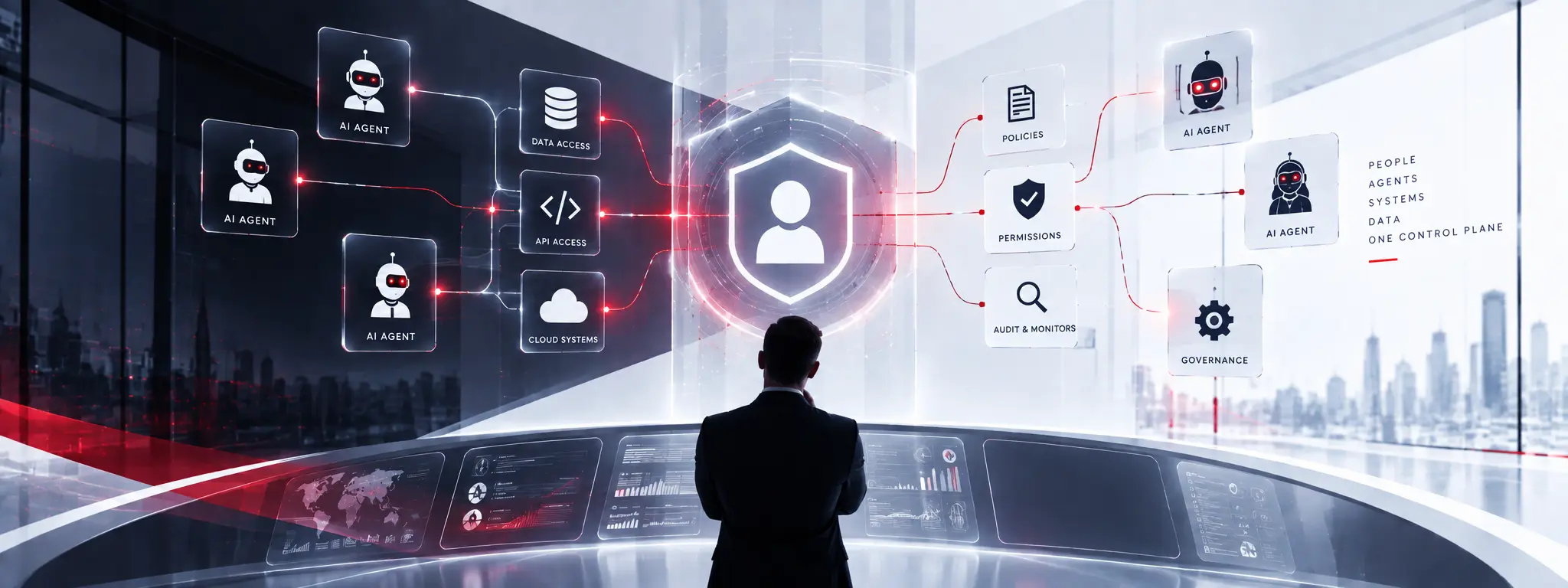
Zero Trust architectures are becoming the norm. Every AI agent must authenticate, authorise and continuously validate its actions. Identity-centric controls are central to modern ai security.
These market drivers indicate that spending on AI protection technologies will continue to rise throughout 2026 and beyond.
Key Technologies in AI Security

Protecting intelligent systems requires a blend of established cybersecurity practices and AI-specific safeguards.
1. Zero Trust Architecture
Zero Trust ensures that every AI agent must continuously verify its identity and permissions before accessing resources. No entity is trusted by default — regardless of location or function.
2. Behavioural Monitoring
Advanced monitoring tools analyse the activity patterns of each AI agent. If behaviour deviates from established baselines, alerts are triggered automatically. This proactive approach strengthens ai security.
3. Secure Model Lifecycle Management
AI models must be protected throughout their lifecycle; from development and training to deployment and retirement. This includes preventing tampering, data poisoning and unauthorised modification.
4. Data Integrity Controls
Encryption, validation checks and secure pipelines ensure that training and operational data remain accurate and unaltered.
5. Explainability and Audit Trails
Every action performed by an AI agent should be logged and traceable. Transparent reporting enhances compliance, accountability and forensic investigation.
6. Automated Threat Detection
Ironically, AI is increasingly used to protect AI. Intelligent monitoring systems detect anomalies in real time, strengthening overall ai security posture.
7. Identity Governance and Access Management
Each AI agent must operate under least-privilege principles. Identity lifecycle management reduces privilege creep and ensures that permissions remain appropriate over time.
Together, these technologies form the backbone of enterprise-grade ai security in 2026.
Use Cases: AI Agent Security in Action
1. Financial Services
Banks deploy AI systems to monitor transactions and detect fraud. Robust ai security ensures attackers cannot manipulate detection algorithms or exploit agents to authorise fraudulent payments.
2. Healthcare
Healthcare providers use AI to manage patient diagnostics and records. Securing each AI agent protects highly sensitive medical data from unauthorised access.
3. Cybersecurity Operations
Security teams deploy defensive AI agents that scan networks and respond to threats. Without strong ai security, these agents themselves could become compromised.
4. Identity and Access Management
Organisations use AI to automate provisioning and deprovisioning processes. Integrated ai security ensures role-based access, continuous monitoring and regulatory compliance.
5. E-commerce and Retail
Retail platforms rely on AI for personalisation, demand forecasting and stock management. Protecting each AI agent preserves data integrity and customer trust.
Across sectors, intelligent automation delivers efficiency and insight — but only when supported by mature ai security frameworks.
Challenges Facing the Market
Despite rapid technological advancement, several challenges remain.
1. Complexity
Large enterprises may deploy dozens of AI systems across departments. Managing each AI agent securely requires coordination between IT, security, compliance and executive leadership.
2. Talent Shortage
Professionals with expertise in both artificial intelligence and cybersecurity are in high demand. Specialists capable of designing and implementing effective ai security architectures are scarce.
3. Model Vulnerabilities
Adversarial attacks can manipulate AI outputs. Continuous testing and validation are required to protect every AI agent against emerging threats.
4. Governance Gaps
Many organisations lack clearly defined ownership of AI risk. Without structured governance frameworks, ai security initiatives can become fragmented or inconsistent.
5. Legacy Infrastructure
Older systems may not support advanced monitoring, authentication or access control capabilities. Integrating modern ai security measures into legacy environments presents practical difficulties.
Addressing these challenges requires strategic planning, long-term investment and executive commitment.
What to Expect in the Coming Years
Looking beyond 2026, several important developments are likely to shape the AI landscape.
1. Autonomous Security Agents
Security teams will increasingly deploy defensive AI agents to monitor other agents. This layered defence model will strengthen overall ai security resilience.
2. AI Risk Regulation
Governments are expected to introduce stricter reporting and accountability standards for AI systems, making compliance-driven ai security a necessity.
3. Standardised Frameworks
Industry-wide standards will emerge, defining best practices for AI agent deployment, governance and protection.
4. Continuous Identity Verification
Every AI agent will operate within dynamic identity ecosystems featuring real-time authentication and authorisation checks.
5. AI Resilience Engineering
Organisations will design AI architectures with the assumption that compromise is possible. Containment strategies and segmentation will minimise impact, further strengthening ai security.
AI ecosystems will become increasingly interconnected. Proactive, adaptive and identity-first ai security will be essential to maintaining digital trust.
Conclusion
The evolution of the AI agent represents one of the most transformative shifts in the history of the digital enterprise. In 2026, these intelligent systems are no longer experimental tools, they are operational decision-makers embedded across industries. However, autonomy introduces risk. Without comprehensive ai security, organisations expose themselves to data breaches, compliance failures and operational disruption.
Forward-thinking enterprises are embedding identity governance, Zero Trust principles, behavioural monitoring and secure model lifecycle management into their AI strategies. Security is no longer an afterthought; it is foundational to innovation.
Organisations seeking to strengthen their identity-first AI protection strategy can look to Trevonix a global cybersecurity and identity solutions provider headquartered in London. Trevonix supports businesses in building secure digital foundations, protecting intelligent systems and implementing scalable governance models tailored to modern AI environments.
As AI adoption accelerates, the key question is not whether to deploy intelligent automation but how securely it can be achieved. The future belongs to organisations that innovate boldly while safeguarding every AI agent with resilient, forward-looking ai security frameworks.