
Table of Contents
- Introduction
- What Is an AI Agent?
- Understanding Identity Risk in the Age of AI
- Why Traditional Security Models Will Not Be Enough in 2026
- AI Agents as Both a Security Asset and a Risk
- Identity as the New Security Foundation
- Building a Strong Security Foundation for AI-Driven Systems
- How Security Teams Must Prepare for 2026
- Future Outlook: What Security Will Look Like Beyond 2026
- Conclusion
The rise of the ai agent is transforming how organisations operate, how decisions are made, and how digital systems interact. In just a few years, organisations have moved from experimenting with automation to deploying autonomous AI-driven systems that can reason, act and adapt. By 2026, the ai agent will not merely assist humans — it will independently execute tasks, access sensitive data and interact across multiple enterprise platforms.
This rapid evolution creates significant opportunity, but it also introduces serious identity risk. Every ai agent requires credentials, permissions and clearly defined roles. If those identities are poorly managed, the consequences may include large-scale exposure, regulatory breaches or operational disruption.
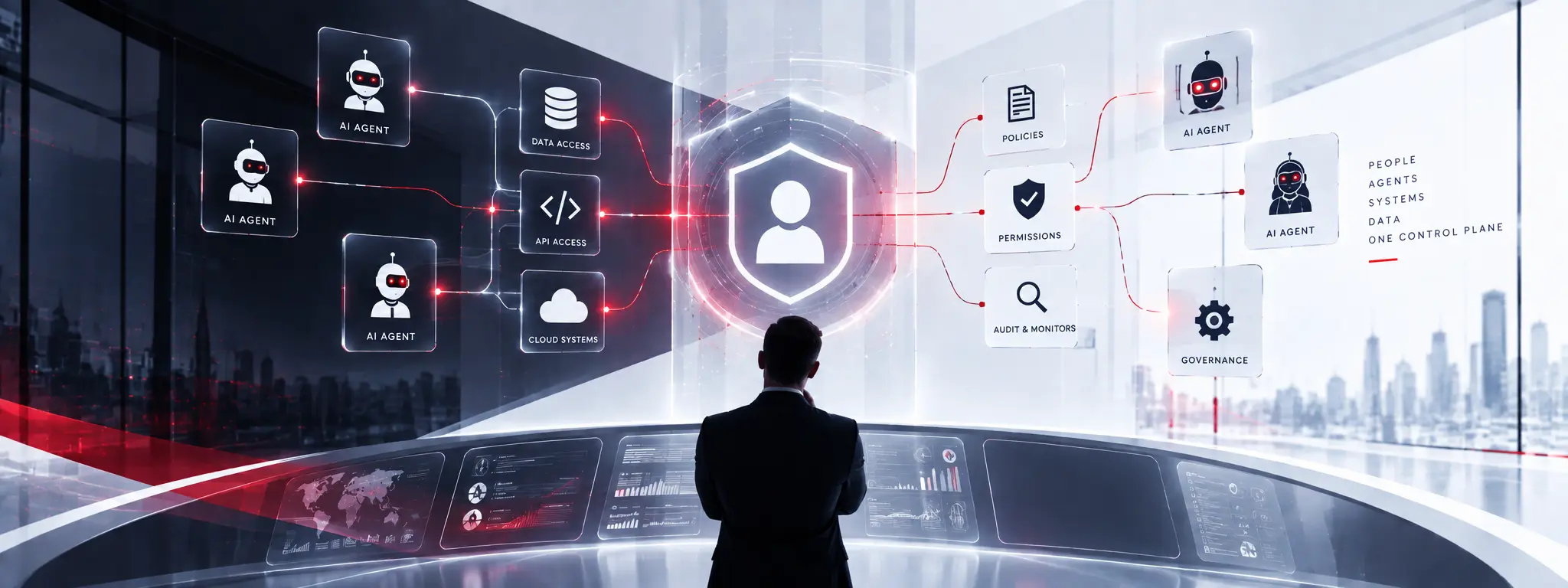
As a result, the concept of security is shifting. Traditional perimeter-based models are no longer sufficient. Instead, organisations must establish a robust security foundation centred on identity governance, continuous monitoring and intelligent access controls.
In this blog, we explore how the ai agent will reshape digital ecosystems, why identity becomes the core of protection, and how organisations must prepare their security foundation for 2026 and beyond.
What Is an AI Agent?
An ai agent is an autonomous software system designed to perceive its environment, make decisions and take actions to achieve defined objectives. Unlike traditional automation scripts that follow fixed instructions, an ai agent can learn from data, adapt to new inputs and interact with multiple systems without direct human supervision.
In 2026, an ai agent will:
- Analyse enterprise data in real time
- Trigger automated workflows
- Access applications and APIs
- Make context-aware decisions
- Communicate with other systems or agents
This effectively makes each ai agent a member of the digital workforce. It requires authentication, authorisation and monitoring — just like a human employee.
The key difference lies in scale. Organisations may deploy hundreds or even thousands of AI agents across departments. Each one represents a new digital identity within the ecosystem, expanding the attack surface and increasing overall identity risk.
Understanding Identity Risk in the Age of AI
Identity risk refers to threats arising from poorly managed digital identities — whether human, machine or AI-driven. In the age of the ai agent, identity risk increases significantly because:
- AI agents operate at high speed.
- They access large volumes of data.
- They often require broad permissions to function effectively.
If an AI agent is compromised, attackers may gain access to systems far more quickly than through a single human account.
Key contributors to identity risk in AI environments include:
- Excessive or over-provisioned permissions
- Shared credentials
- Insufficient monitoring of non-human identities
- Weak lifecycle management
- Poor segregation of duties
Traditional identity management systems were primarily designed for employees and customers. Today, AI agents must also be onboarded, assigned appropriate roles and deprovisioned correctly. Without a strong security foundation, unmanaged AI identities can become invisible entry points for attackers.
By 2026, identity risk will extend beyond phishing and password leaks. It will include unauthorised AI behaviour, rogue agents and manipulated decision-making systems.
Why Traditional Security Models Will Not Be Enough in 2026
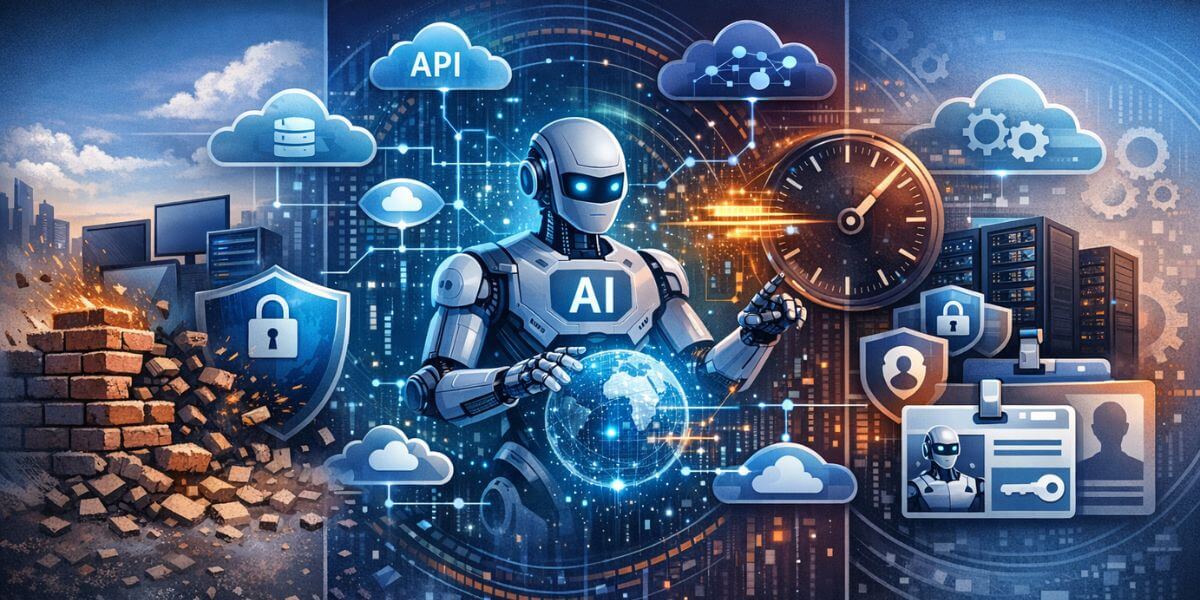
For decades, organisations relied on perimeter-based security models. Firewalls, VPNs and endpoint protection tools formed the primary defensive layer. However, the ai agent does not operate within a fixed perimeter.
AI systems:
- Access cloud platforms
- Interact with APIs
- Communicate across multi-cloud environments
- Operate continuously
- Trigger automated processes instantly
Traditional security approaches focus on protecting networks. AI-driven ecosystems, however, require identity-centric protection.
Here is why older models are insufficient:
1. The Perimeter Is Obsolete
The ai agent operates across distributed systems. There is no clear boundary to defend.
2. Speed of Operations
An AI agent can execute thousands of actions per minute. Manual monitoring simply cannot keep pace.
3. Complexity of Permissions
AI agents often require simultaneous access to multiple systems. Without tight control, this significantly increases identity risk.
4. Limited Governance for Non-Human Identities
Many organisations do not apply the same governance standards to machine identities as they do to human accounts.
By 2026, organisations that fail to modernise their security foundation will struggle to maintain control over AI-driven operations.
AI Agents as Both a Security Asset and a Risk
The ai agent represents both opportunity and exposure. It can strengthen security, yet it can also create new vulnerabilities.
AI Agents as a Security Asset
An AI agent can:
- Detect anomalies in authentication patterns
- Identify suspicious behaviour
- Automate access reviews
- Monitor compliance obligations
- Respond to incidents in real time
By analysing behavioural data across systems, an ai agent can reinforce the overall security foundation and reduce operational overhead.
AI Agents as a Risk
However, when poorly governed, the same ai agent can:
- Expose sensitive information
- Automatically escalate privileges
- Execute unauthorised transactions
- Bypass manual approval processes
If attackers manipulate an AI agent’s logic or compromise its credentials, the impact may be severe and immediate.
This dual nature makes identity governance essential. The more capable the ai agent becomes, the more carefully organisations must manage identity risk.
Identity as the New Security Foundation
By 2026, identity will replace the network as the central security foundation.
Why?
Because every action — human or AI-driven — begins with authentication and authorisation.
An ai agent must:
- Prove its identity
- Request access
- Receive authorised permissions
- Operate within policy boundaries
Without effective identity governance, the entire security foundation is weakened.
Core Principles of Identity-Driven Security
- Zero Trust Architecture
- Every AI agent must continuously verify its identity.
- Least Privilege Access
- Grant only the minimum permissions required.
- Continuous Monitoring
- Track AI activity in real time.
- Lifecycle Management
- Onboard, update and decommission AI agents systematically.
- Role-Based and Policy-Based Controls
- Align access with defined business responsibilities.
When identity becomes central to strategy, organisations reduce identity risk and transition from reactive defence to proactive governance.
Building a Strong Security Foundation for AI-Driven Systems

To support the growth of the ai agent, organisations must reinforce their security foundation in several ways.
1. Implement Identity Governance and Administration (IGA)
IGA ensures every AI agent has:
- Clear ownership
- Approved permissions
- Regular access reviews
- Enforced policy compliance
2. Automate Identity Lifecycle Management
Each ai agent should follow a structured Joiner–Mover–Leaver model:
- Joiner – The agent is created and provisioned.
- Mover – Permissions are updated as responsibilities change.
- Leaver – The agent is securely decommissioned.
This approach significantly reduces identity risk caused by orphaned or forgotten agents.
3. Adopt Zero Trust Frameworks
Zero Trust assumes no identity is inherently trusted. Every ai agent must authenticate and revalidate continuously.
4. Use Behavioural Analytics
Monitoring how an AI agent behaves enables early detection of anomalies. If activity deviates from expected patterns, alerts should be triggered immediately.
5. Secure APIs and Integrations
AI agents depend heavily on APIs. Protecting these integration points is essential for maintaining a resilient security foundation.
By combining governance, monitoring and policy enforcement, organisations can effectively manage identity risk in AI-driven environments.
How Security Teams Must Prepare for 2026
Security teams must rethink their approach in several key areas.
1. Shift from Device-Centric to Identity-Centric Security
Focus on who or what is requesting access — not simply where the request originates.
2. Expand Visibility to Non-Human Identities
Every ai agent should appear in access dashboards alongside employees and contractors.
3. Collaborate with AI Development Teams
Security professionals must work closely with AI engineers to embed governance controls during system design.
4. Invest in Automation
Manual processes cannot match the speed of AI operations. Automation strengthens the security foundation and ensures consistency.
5. Strengthen Compliance Controls
Regulators are increasingly scrutinising how organisations manage AI-related identity risk. Proactive governance reduces legal and reputational exposure.
Preparing now ensures that by 2026, organisations will not be forced to retrofit controls under pressure.
Future Outlook: What Security Will Look Like Beyond 2026
Beyond 2026, the ai agent will become even more autonomous. Multi-agent ecosystems will collaborate across organisations and industries.
Emerging trends may include:
- Self-governing AI systems
- Dynamic identity tokens
- Context-aware access decisions
- Decentralised identity frameworks
- AI-powered compliance monitoring
In this landscape, the security foundation must be adaptive, intelligent and identity-first.
While identity risk will remain a challenge, organisations that embed governance into AI architecture will maintain resilience.
Future security will become:
- Predictive rather than reactive
- Continuous rather than periodic
- Identity-driven rather than network-driven
The AI revolution shows no signs of slowing. The only sustainable strategy is to build an identity-centric security foundation that evolves alongside the ai agent.
Conclusion
The rise of the ai agent represents a defining moment in digital transformation. As AI systems gain autonomy and operational authority, identity becomes the cornerstone of modern security. Organisations that fail to manage identity risk effectively will face increasing exposure in 2026 and beyond.
The message is clear: identity is the new perimeter. A resilient security foundation must incorporate strong identity governance, Zero Trust principles, lifecycle management and continuous monitoring for both human and non-human identities.
Forward-thinking organisations are already preparing for this transition. Companies such as Trevonix, a global cybersecurity firm headquartered in London, are supporting enterprises in modernising their identity strategies and building robust AI-ready architectures. By combining innovation with governance expertise, Trevonix helps organisations reduce identity risk and strengthen their long-term security foundation.
As 2026 approaches, the question is no longer whether AI agents will reshape enterprise environments — it is whether your security foundation is prepared to support them.