
Thinking Machines, Smarter Security
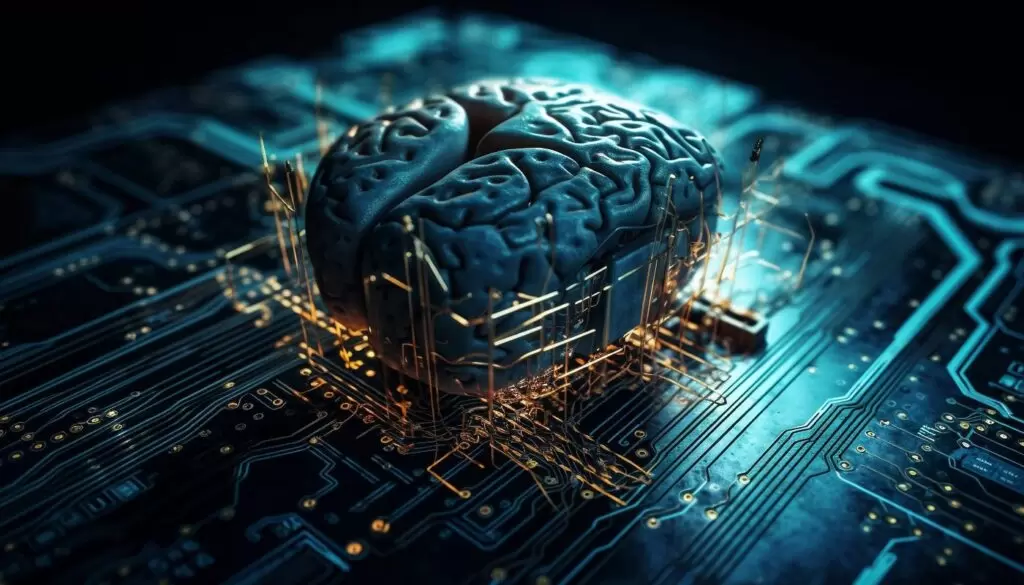
The 2025 tech landscape, as predicted by Gartner, is set to be reshaped by neuromorphic computing—a powerful form of computation that mimics the human brain. At its core, this technology promises faster processing, ultra-low power consumption, and contextual learning at scale.
But while the excitement centers around AI breakthroughs and real-time decision-making, there's a quieter revolution underway: its application to cybersecurity and identity management.
At Trevonix, we believe that neuromorphic computing isn’t just the next leap in artificial intelligence—it’s also a game-changer for how we protect digital systems, verify identities, and detect threats in an increasingly complex world.
What is Neuromorphic Computing?
Unlike traditional computing, which processes information linearly, neuromorphic systems mimic the brain’s neural architecture, allowing them to:
- Process data in parallel
- Learn from patterns and adapt in real time
- Respond to stimuli with minimal energy use
- Continuously update their ‘understanding’ of context
These systems are built using spiking neural networks (SNNs)—designed to simulate neurons firing in response to environmental inputs.
Key differentiator: Neuromorphic chips don't just analyze data. They experience it—learning and reacting in ways that are far more intuitive and efficient than current silicon-based processors.
Identity in the Age of Adaptive Machines
As neuromorphic systems enter cybersecurity infrastructure, they’re transforming how we approach digital identity—not as static credentials, but as dynamic behavior profiles.
Here’s what this means for IAM:
- Real-time identity modeling based on contextual patterns (keystroke rhythm, voice modulations, navigation paths)
- Adaptive authentication, where systems respond differently depending on behavioral trust scores
- Cognitive biometric fusion, where neuromorphic chips process and verify complex identity signals like facial micro-expressions, motion patterns, and EEG signals
Example:
An advanced fintech company integrates neuromorphic authentication into its mobile app. Instead of a password, the system continuously verifies users by monitoring how they interact with the app—scroll speed, pressure sensitivity, hand tremors. This passive approach reduces login friction while improving identity assurance.
Use Case: Neuromorphic Threat Detection in Critical Infrastructure
Let’s say a malicious actor is slowly probing a smart grid network, launching low-and-slow attacks designed to avoid detection.
A traditional security system might miss it, due to pre-programmed thresholds.
But a neuromorphic security system—modeled on human-like vigilance—would detect subtle deviations in:
- Command sequences
- Network topology behavior
- Sensor response timings
- User movement and access flow
It would then flag the anomaly, adapt its response, and notify the SOC in real time—all with minimal energy usage and at lightning speed.
Cybersecurity Benefits of Brain-Inspired Systems
Neuromorphic and brain-inspired computing unlocks several breakthrough advantages for cybersecurity:
- Faster Pattern Recognition
Identify threats within microseconds—ideal for real-time intrusion detection in high-volume environments like telecom or defense. - Energy Efficiency
Security operations centers (SOCs) can deploy lightweight monitoring agents that consume <10% of the energy of traditional silicon chips. - Continuous Learning
Unlike rule-based systems, neuromorphic tools can evolve based on emerging threats, unknown exploits, and zero-day vulnerabilities. - Sensor Fusion Security
Combine physical security data (CCTV, motion sensors) with digital security inputs (logins, API traffic) for context-rich alerts.
The Future of Zero Trust: Cognitive and Contextual
Zero Trust is a foundational security model—but with neuromorphic computing, it becomes smarter and more nuanced.
Imagine:
- Devices that adjust their level of trust based on user stress indicators (measured via wearable EEGs)
- Access control that adapts based on real-time intent inference
- Continuous trust scoring that updates with every interaction—not just every login
This is not science fiction. It’s a near-future scenario already being prototyped by advanced research labs, and it’s one Trevonix is helping to bring into enterprise environments.
Market Momentum and Strategic Relevance
Neuromorphic computing is poised to become a defining force across sectors:
Key Stats:
- The global neuromorphic computing market is expected to grow from $36 million in 2023 to $550 million by 2030, according to Market Research Future.
- 80% of large enterprises are expected to pilot at least one neuromorphic solution in AI, robotics, or security by 2027.
- Intel, IBM, and Qualcomm are actively developing commercial neuromorphic chips.
Sectors to Watch:
- Healthcare: Identity verification in real-time diagnostics
- Banking: Fraud detection through adaptive pattern analysis
- Smart Cities: Identity-aware threat monitoring in public infrastructure
Trevonix Perspective: Securing the Human-Machine Interface
At Trevonix, we don’t just see neuromorphic computing as a faster chip—we see it as an opportunity to reimagine digital identity and cyber defense.
We are:
- Experimenting with neuromorphic-enhanced IAM modules
- Integrating behavioral analytics and real-time neural signal processing into security dashboards
- Designing contextual policy engines that react to sensory and spatial data—not just user credentials
Our goal? To help enterprises transition from static defense models to fluid, intuitive security systems that evolve alongside user behavior and environmental complexity.
Challenges and Considerations
As with any emerging technology, neuromorphic systems also bring challenges:
- Standardization: No universal protocols yet for neuromorphic identity modeling
- Explainability: Hard to trace decision paths in brain-like systems (black box risk)
- Skill gaps: Shortage of engineers who understand both neuroscience and cybersecurity
- Ethical governance: Risk of over-surveillance if neuromorphic AI is misused
That’s why Trevonix advocates for ethical AI governance, open standards, and privacy-first architectures as we embrace these advanced tools.
Intelligence That Protects
As digital threats grow more complex, our security systems must become not just faster—but smarter. Neuromorphic computing offers that leap, enabling cybersecurity tools that think, learn, and adapt like a human brain—but operate at machine speed.
Identity verification will no longer rely on simple yes-or-no credentials. It will be behavioral, contextual, and continuous. Threat detection will no longer be reactive—it will be predictive, adaptive, and autonomous.
At Trevonix, we’re leading the charge toward a future where cognitive security is not a luxury—but a necessity.