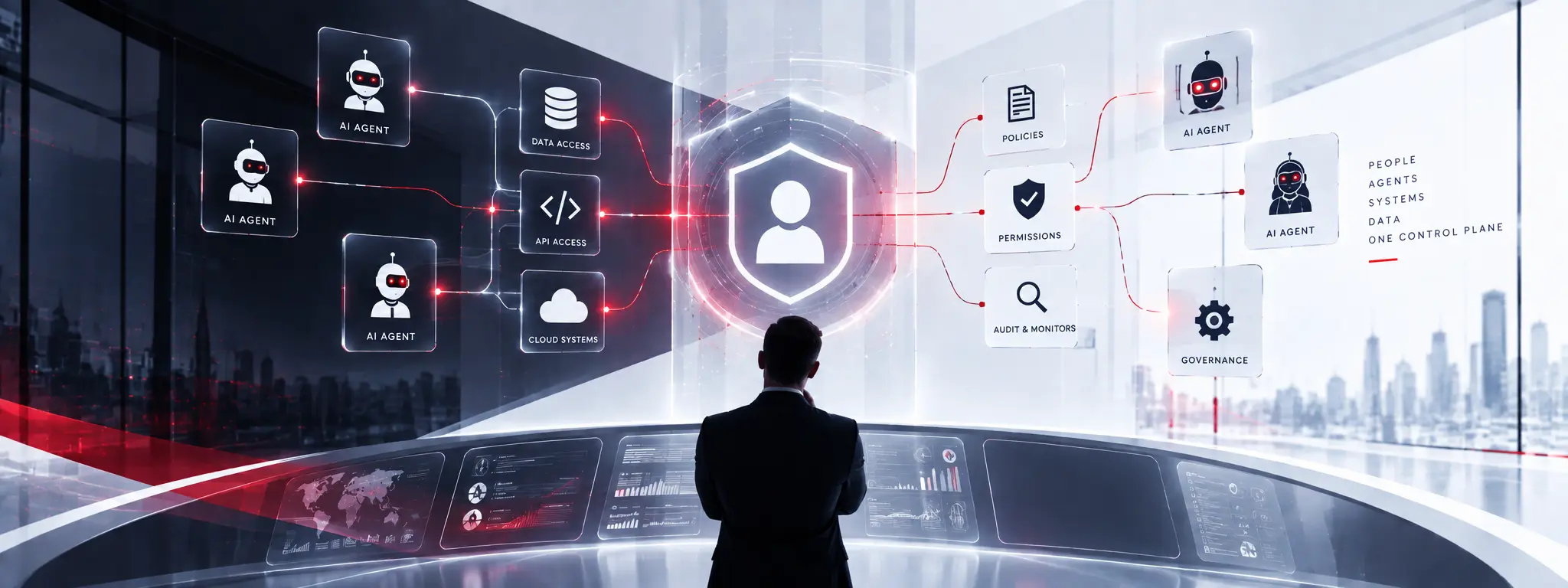

This is where enterprise IAM (Identity and Access Management) becomes critical. It ensures secure access, enforces policies, and protects sensitive resources. However, as organizations grow, their identity ecosystems become fragmented. Multiple identity providers, cloud platforms, legacy systems, and third-party integrations create silos that are difficult to manage.
To solve this growing complexity, organizations are turning toward a new architectural component: the mcp server.
If you are exploring modern identity strategies, understanding the role of an mcp server is essential. This blog explains what it is, how it works, and why enterprise IAM increasingly depends on it for scalability, flexibility, and security.
Table of Contents
- What Is an MCP Server?
- Understanding the Role of Enterprise IAM in Modern Organisations
- The Identity Infrastructure Challenges Enterprises Face
- How an MCP Server Works
- Key Components of an MCP Server
- Why Enterprise IAM Needs an MCP Server
- Benefits of MCP Server Integration in Enterprise IAM
- MCP Server vs Traditional Identity Integration Approaches
- Use Cases of MCP Server in Enterprise IAM Environments
- Security Considerations for MCP Server Implementation
- Best Practices for Deploying an MCP Server in Enterprise IAM
- Future of MCP Servers in Identity and Access Management
- Conclusion
What Is an MCP Server?
An MCP server (Model Context Protocol server or Managed Control Plane server, depending on implementation context) is a centralised orchestration layer that connects, manages, and standardises communication between identity systems, applications, and services.
In simpler terms, an MCP server acts as a bridge between different identity tools and systems, ensuring that data, policies, and authentication flows work seamlessly across environments.
Instead of building multiple point-to-point integrations, organisations use an MCP server to:
- Centralise identity communication
- Standardise authentication flows
- Simplify integrations
- Improve visibility and control
For organisations managing complex enterprise IAM, this centralised approach reduces fragmentation and improves efficiency.
Understanding the Role of Enterprise IAM in Modern Organisations
Before diving deeper into the MCP server, it’s important to understand the role of enterprise IAM.
Enterprise IAM is responsible for:
- Managing user identities
- Controlling access to systems
- Enforcing authentication policies
- Ensuring compliance and auditability
In modern organisations, enterprise IAM must support:
- Cloud and hybrid environments
- Remote workforces
- Third-party integrations
- Customer identity systems
As the scope of enterprise IAM expands, the need for a unifying layer like an MCP server becomes more apparent.
The Identity Infrastructure Challenges Enterprises Face
Despite investments in enterprise IAM, many organisations struggle with:
1. Fragmented Identity Systems
Different departments use different tools, leading to silos.
2. Complex Integrations
Point-to-point integrations increase maintenance overhead.
3. Lack of Visibility
Security teams lack centralised monitoring.
4. Scalability Issues
As organisations grow, identity systems become harder to manage.
5. Inconsistent Policies
Policies differ across systems, creating security gaps.
These challenges highlight why enterprise IAM needs a centralized orchestration layer—and why the MCP server is gaining importance.
How an MCP Server Works
An MCP server acts as an intermediary between identity providers, applications, and services.
Here’s how it typically works:
- A user attempts to access an application
- The request is routed through the MCP server
- The server validates identity using IAM systems
- Policies are applied centrally
- Access is granted or denied
- Activity is logged and monitored
This approach allows enterprise IAM systems to operate more efficiently by reducing direct dependencies between systems.
Key Components of an MCP Server
To understand the full capability of an MCP server, let’s break down its key components:
1. Integration Layer
Connects with identity providers, directories, and applications.
2. Policy Engine
Applies access rules and security policies centrally.
3. Identity Broker
Handles authentication and authorization flows.
4. API Gateway
Facilitates secure communication between services.
5. Monitoring and Logging Module
Tracks activity and detects anomalies.
Each of these components enhances the effectiveness of enterprise IAM by providing centralised control.
Why Enterprise IAM Needs an MCP Server
The need for an MCP server becomes clear when you look at the limitations of traditional IAM architectures.
1. Centralised Control
An mcp server provides a single point of control for identity flows.
2. Reduced Complexity
Instead of multiple integrations, systems connect to one layer.
3. Improved Security
Centralised policy enforcement reduces gaps.
4. Faster Deployment
New applications can be integrated quickly.
For modern enterprise IAM, these benefits are essential.
Benefits of MCP Server Integration in Enterprise IAM
Integrating an MCP server into enterprise IAM delivers several advantages:
Simplified Architecture
Reduces dependency on multiple connectors.
Better Scalability
Supports growing identity ecosystems.
Enhanced Visibility
Provides centralized monitoring and analytics.
Stronger Security
Ensures consistent policy enforcement.
Faster Innovation
Enables rapid onboarding of applications.
These benefits make the MCP server a valuable addition to any enterprise IAM strategy.
MCP Server vs Traditional Identity Integration Approaches
Traditional IAM integrations rely on:
- Point-to-point connections
- Custom scripts
- Manual configurations
This comparison shows why modern enterprise IAM is shifting toward the MCP server model.
Use Cases of MCP Server in Enterprise IAM Environments
1. Multi-Cloud Identity Management
An MCP server connects identity systems across clouds.
2. Application Integration
Simplifies onboarding of SaaS and internal apps.
3. Customer Identity Management
Enhances user experience with seamless authentication.
4. DevOps and Automation
Supports automated identity workflows.
5. Third-Party Access Management
Controls access for vendors and partners.
These use cases demonstrate how enterprise IAM becomes more efficient with an MCP server.
Security Considerations for MCP Server Implementation
While an MCP server improves security, it must be implemented carefully.
Key considerations include:
- Strong authentication mechanisms
- Secure API communication
- Encryption of data in transit and at rest
- Regular audits and monitoring
For enterprise IAM, security must remain the top priority when deploying an MCP server.
Best Practices for Deploying an MCP Server in Enterprise IAM
To successfully implement an MCP server, follow these best practices:
Start with a Clear Strategy
Define goals and scope.
Integrate Gradually
Avoid large-scale disruption.
Focus on Identity First
Ensure strong authentication systems.
Automate Where Possible
Reduce manual errors.
Monitor Continuously
Track performance and security.
These practices ensure smooth adoption within enterprise IAM environments.
Future of MCP Servers in Identity and Access Management
The future of the mcp server is closely tied to the evolution of enterprise IAM.
Emerging trends include:
- AI-driven identity management
- Real-time risk-based authentication
- Decentralised identity models
- API-first security architectures
As identity ecosystems grow more complex, the role of the mcp server will become even more critical.
Conclusion
Understanding the mcp server is essential for organizations looking to modernize their identity infrastructure. As enterprise IAM continues to evolve, the need for centralized orchestration, scalability, and security becomes increasingly important.
By integrating an mcp server, organisations can:
- Simplify identity architecture
- Improve security posture
- Enhance operational efficiency
- Scale seamlessly across environments
For businesses aiming to strengthen their enterprise IAM strategy, partnering with experts can make a significant difference.
A company like Trevonix, a global organisation headquartered in London, specializes in advanced identity and access management solutions. Their expertise helps enterprises adopt modern architectures, including mcp server-based models, to build secure and scalable identity ecosystems.
In a world where identity is the new security perimeter, adopting the right architecture is no longer optional—it’s a necessity.