
The modern attack surface is increasingly centred around identity.
When attackers target a specific individual, they are not simply attempting to compromise a device. They are attempting to gain access to the identity, relationships, communications, applications, credentials, and information connected to that individual.
Why Targeted Spyware Is an Identity Security Challenge
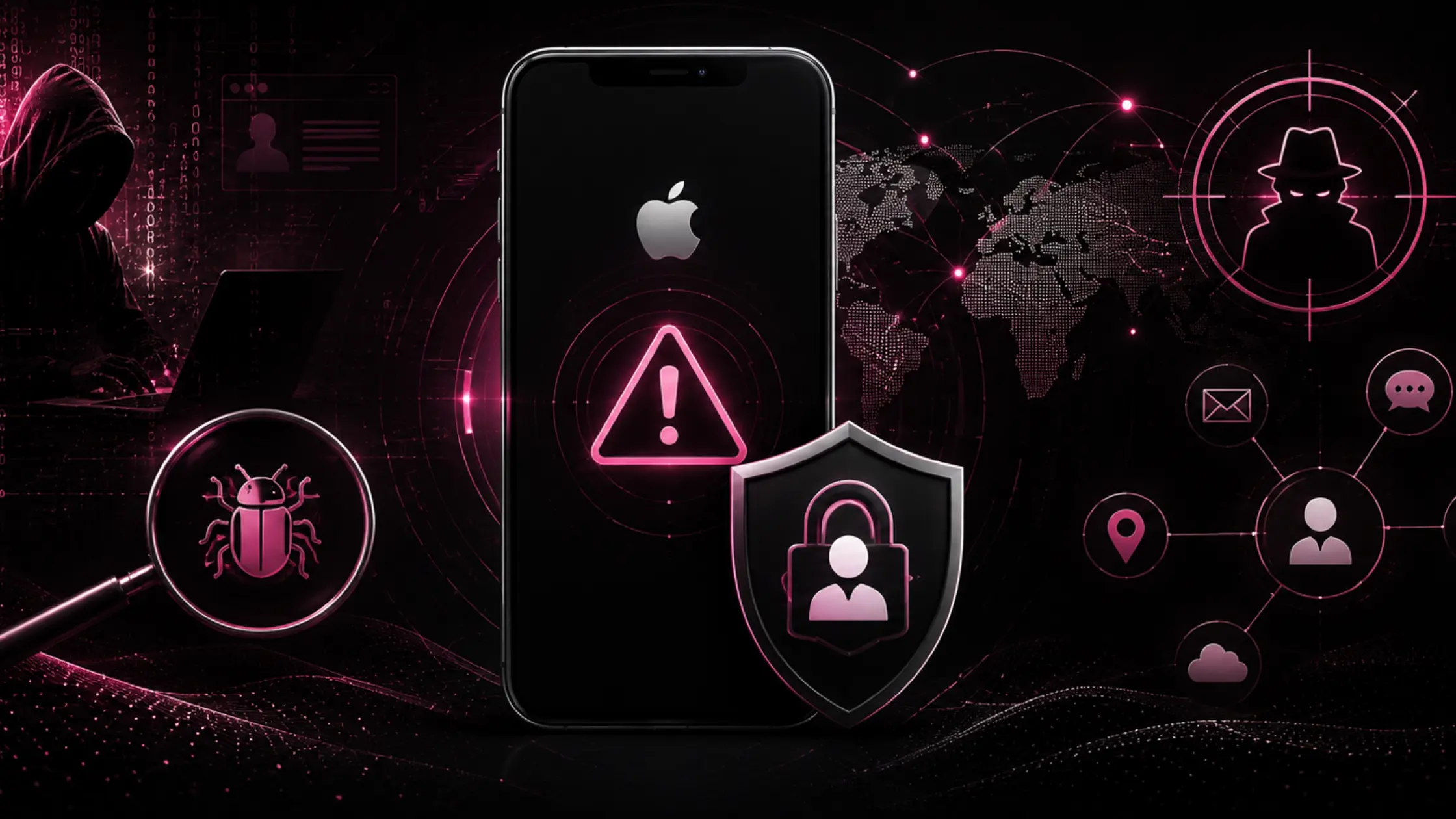
Mercenary spyware represents an advanced form of identity driven cyber risk.
Unlike conventional malware campaigns that may target large numbers of users, these attacks are designed around specific individuals. Apple notes that such attacks can involve exceptional resources, cost millions of dollars, and may have a short operational lifespan, making them particularly difficult to detect and prevent.
The objective can extend beyond compromising a device to gaining access to
• Personal and professional accounts
• Sensitive communications
• Corporate applications
• Authentication credentials
• Confidential documents
• Contact networks
• Cloud services
• Privileged information
• Business relationships
This makes identity protection a critical component of defending against highly targeted attacks.
From Device Security to Identity Protection
Traditional endpoint security focuses on protecting the device.
However, modern digital identities extend far beyond a single endpoint.
An individual may simultaneously have access to
• Enterprise applications
• Cloud platforms
• Collaboration tools
• Customer systems
• Financial applications
• Administrative environments
• Corporate data
• APIs and connected services
If an attacker successfully compromises the identity behind these connections, the device is only the starting point.
The real target is the digital ecosystem surrounding the identity.
The Business Impact of Targeted Identity Compromise
For organisations, a compromised identity can create consequences that extend well beyond the affected user.
Potential risks include
• Unauthorised access to corporate applications
• Exposure of sensitive business information
• Credential theft
• Privilege escalation
• Session compromise
• Lateral movement across enterprise systems
• Access to confidential communications
• Data exfiltration
• Regulatory and compliance exposure
• Reputational damage
A single compromised identity can become an entry point into a much larger enterprise environment.
Why Authentication Alone Is Not Enough
Strong authentication remains essential, but authentication at a single point in time is no longer sufficient.
Modern identity security requires organisations to continuously evaluate
Who is requesting access?
What device is being used?
What application is being accessed?
What data is being requested?
What level of privilege is required?
Does the behaviour match the identity's normal activity?
Is the access request consistent with the user's risk profile?
This is where Zero Trust and adaptive access controls become increasingly important.
Identity should not be trusted simply because authentication was successful.
It should be continuously evaluated based on context, behaviour, risk, and privilege.
The Importance of High Risk Identity Protection
Not every identity presents the same level of risk.
Executives, administrators, security teams, developers, researchers, journalists, and individuals with access to sensitive information may represent particularly valuable targets.
Organisations should therefore consider identity risk segmentation and stronger controls for high value identities.
This can include
• Phishing resistant authentication
• Passkeys and FIDO2
• Privileged access management
• Risk based authentication
• Continuous session monitoring
• Identity threat detection and response
• Device posture assessment
• Just in time access
• Least privilege enforcement
• Continuous identity monitoring
The objective is to make identity compromise significantly harder to exploit and easier to detect.
The Role of Identity Threat Detection and Response
Traditional security monitoring often focuses on infrastructure, endpoints, and network activity.
Identity threat detection adds another critical layer by looking for abnormal identity behaviour.
Signals may include
• Unusual login patterns
• Unexpected privilege escalation
• Access from unfamiliar environments
• Abnormal application usage
• Suspicious session activity
• Unusual data access
• Credential misuse
• Impossible travel indicators
• Sudden changes in access behaviour
When these signals are correlated continuously, organisations can identify identity compromise earlier and respond before an attacker moves deeper into the environment.
Security Must Extend Beyond the Human Identity
The identity challenge becomes even more complex as enterprises adopt AI, automation, and machine driven workflows.
Human identities increasingly interact with
• AI agents
• Service accounts
• APIs
• Applications
• Workloads
• Cloud resources
• Machine identities
This creates an interconnected identity ecosystem where compromising one identity can potentially provide pathways to other identities and systems.
Identity security therefore needs to extend across both human and non human identities.
Trevonix Perspective
At Trevonix, we see the rise of highly targeted spyware as another indication that identity must become a central pillar of modern cybersecurity.
The objective of advanced attackers is increasingly not simply to break into a system.
It is to become someone who already has trusted access.
This makes identity governance, continuous verification, adaptive access, privileged access management, and identity threat detection essential components of a modern security architecture.
Organisations must move beyond the assumption that authentication establishes trust.
Trust must be continuously evaluated.
Every identity.
Every session.
Every privilege.
Every interaction.
As cyber threats become more targeted and identity driven, protecting the digital identity becomes fundamental to protecting the organisation itself.
Conclusion
Apple's latest threat notifications demonstrate how sophisticated cyber threats are becoming increasingly targeted, identity focused, and difficult to detect. Apple has issued threat notifications multiple times since 2021 and says it has notified users in more than 150 countries in total.
The lesson for enterprises is clear.
Security cannot stop at the endpoint.
It must extend across the entire identity lifecycle and every access pathway connected to that identity.
The future of cybersecurity is not simply about protecting devices and networks.
It is about protecting identities, privileges, relationships, and trust.
Reference
Source: ETCISO, Apple warns users of mercenary spyware attacks with threat notifications across 110 countries.